
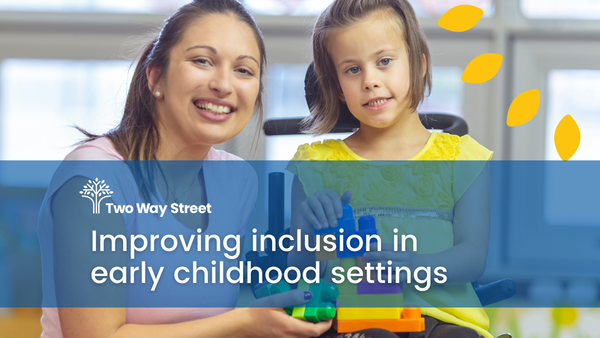
In early childhood education, communication underpins everything: learning, friendships, emotional regulation, and participation.
Yet many early learning environments are still built on a foundation of spoken language as the primary method of communication. For children with communication disability, developmental delay, neurodivergence, emerging language, or multilingual backgrounds, this can create significant barriers.
When children cannot reliably understand what is happening around them—or cannot make themselves understood—frustration, withdrawal, and missed learning opportunities often follow.
This is why early intervention speech pathology becomes most powerful when it extends beyond the individual child and into the environment itself.
Instead of asking “How do we fix the child?”, communication-inclusive practice asks:
How do we design early childhood environments so every child can understand and be understood?
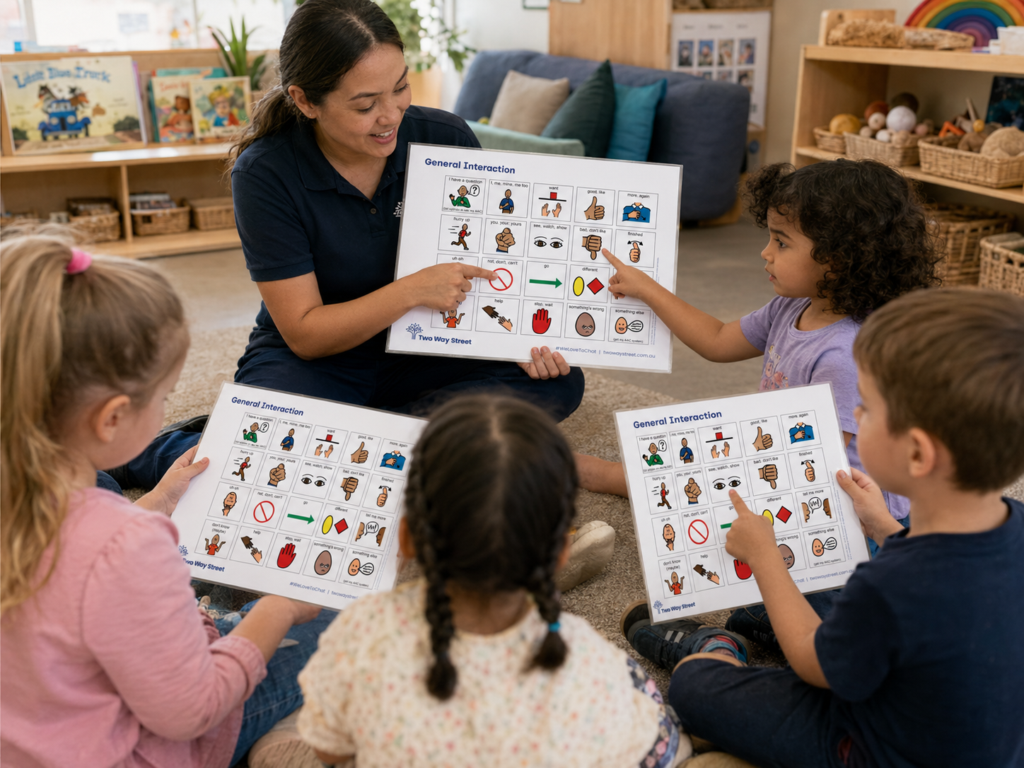
Communication-inclusive early childhood settings recognise that children communicate in many ways. Educators may see communication through:
Drawing on evidence from Augmentative and Alternative Communication (AAC), visual supports are a powerful way to enable multi=modal communication, so all children have more opportunities to participate, connect and learn.
This is where training and coaching for early childhood educators from speech pathologists experienced in AAC and multi-modal communication can make a significant difference.
Many services are familiar with making accommodations once a child is identified as needing support.
While these supports are important, they often come after barriers have already impacted participation. Universal design for multi‑modal communication takes a different approach.
Instead of waiting to respond to challenges, educators design communication environments that support multiple ways of communicating from the beginning.
When environments are intentionally designed, this may include:
When these supports are universal, children who use (or could benefit from using) AAC or visual supports are not different—they are simply participating.
Professional development workshops are valuable, but ongoing coaching and training is what enables real change in early childhood settings.
Our speech pathology team can support educators to:
Rather than adding extra work, our coaching approach helps educators integrate communication strategies into what they already do every day.
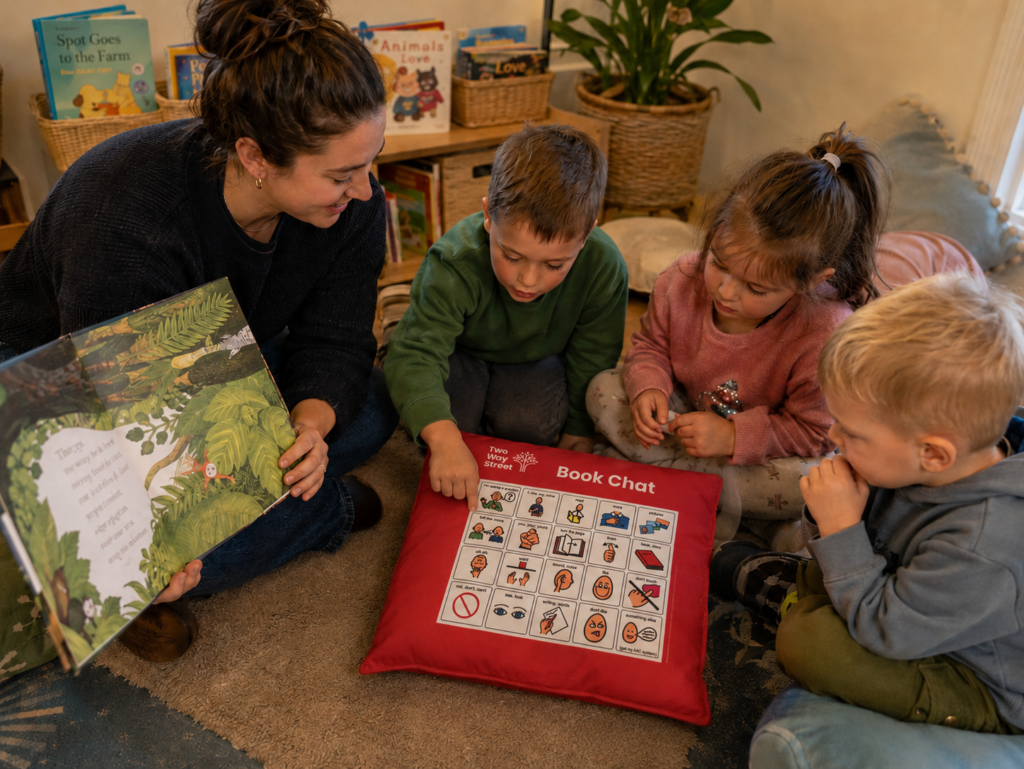
AAC tools and strategies are often misunderstood as something used instead of speech or only for a small cohort of children.
In reality, AAC supports language development, participation and social interaction for many children in early learning environments.
When educators receive coaching and strategies for inclusive communication in early childhood, they can enable:
Most importantly, educators learn how to model AAC naturally, ensuring children see communication tools used meaningfully throughout the day.
A key goal of coaching‑based speech pathology support is sustainable change.
Rather than relying on external professionals, educators develop the capability to:
This approach aligns with sector priorities around inclusive early childhood education, capacity building, and best‑practice early intervention.
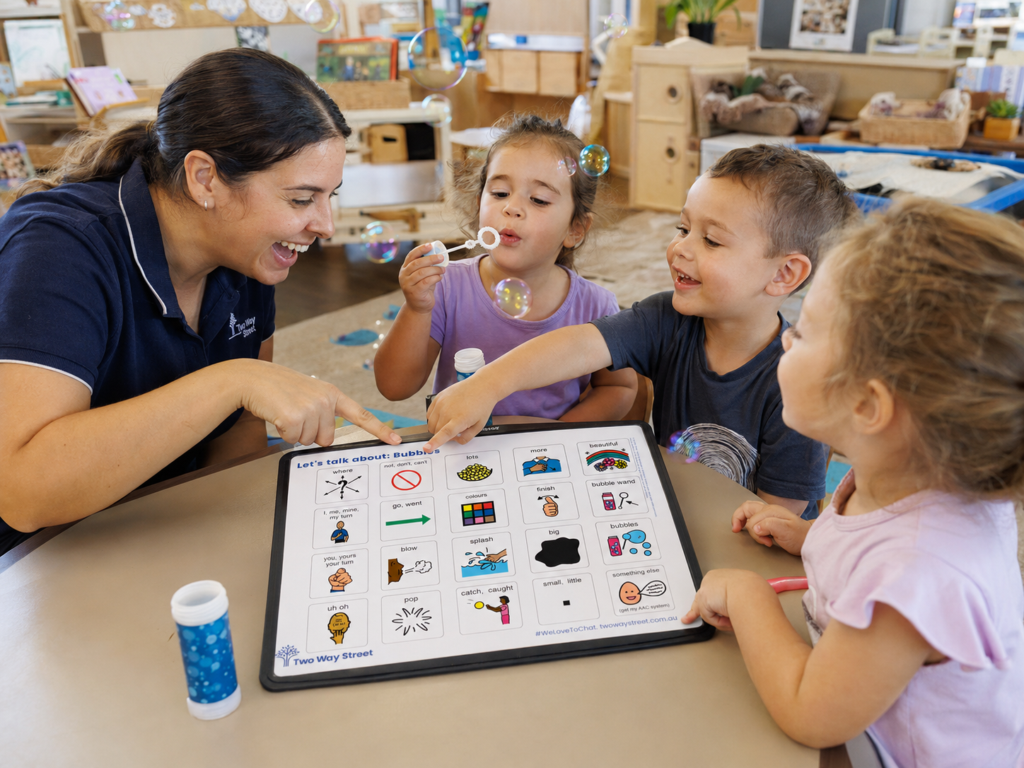
Inclusion can feel overwhelming when it is framed as a large system change.
Effective coaching focuses on shrinking the change so that teams can build confidence gradually.
Early childhood services may begin with:
Small changes compound over time, gradually creating environments where communication inclusion becomes part of everyday practice.
Two Way Street is a speech pathology practice based in Adelaide specialising in meaningful and inclusive communication outcomes. We promote the inclusion of visual communication support for anyone who needs, benefits from, or prefers to use or include methods other than speech to communicate.
Our team partners with early childhood settings to deliver:
The goal is not only to provide tools, but to help services build environments where every child can participate, understand and be understood.
When early childhood settings prioritise communication inclusion, the benefits extend far beyond the early years.
Children who grow up in environments where communication is accessible are more likely to develop:
Coaching and communication-inclusive strategies from experienced speech pathologists helps early childhood educators build these environments, creating opportunities for every child before barriers appear.
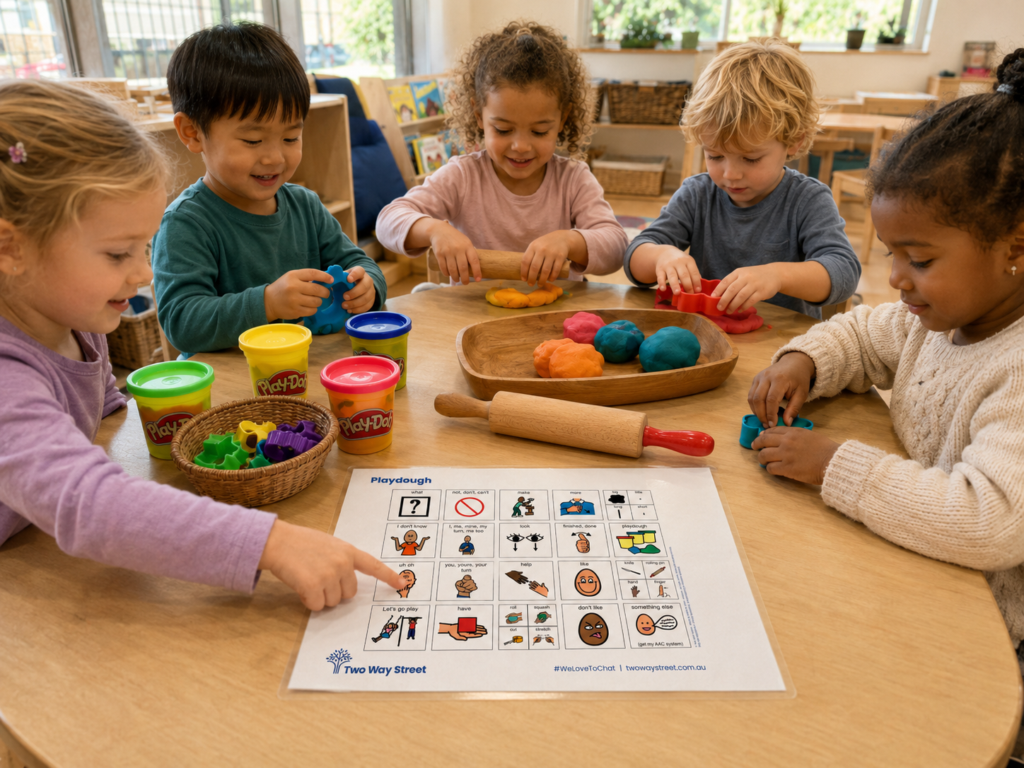
At Two Way Street, we see when educators are supported with the right training, tools and strategies, communication becomes something that works for every child.
Creating communication-inclusive settings doesn’t require a complete overhaul. It starts with one routine, one strategy, one shift in how we share and receive messages. Over time, these changes build environments where children can participate, connect and truly belong.
If you’re ready to strengthen communication in your early learning setting, we’d love to help. Whether you’re a centre leader, educator, or allied health professional, Two Way Street can support your team through:
Start your inclusive communication journey today:
👉 Explore training options
👉 Discover communication tools for your setting
👉 Learn about tailored support for your team
👉 Contact our team