Your cart is currently empty!

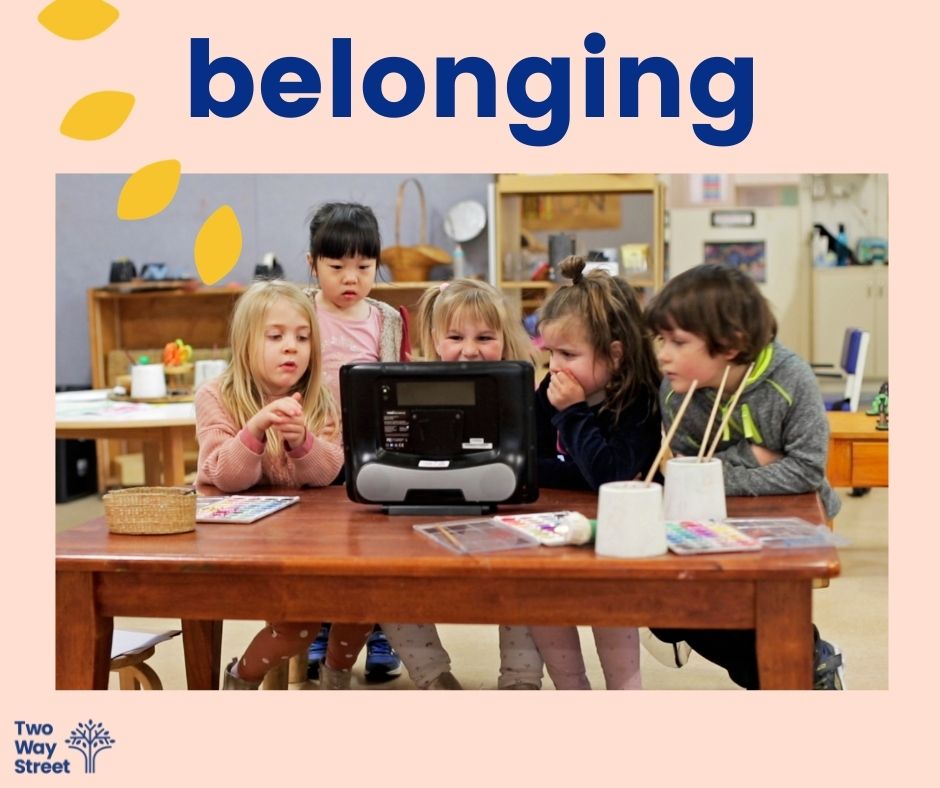
A sense of belonging is at the heart of inclusion. At Two Way Street, we believe this to be true. Inclusion is about more than a place, more than just being in the same room. Inclusion is about a sense of belonging, about not only being accepted but about being valued and appreciated for who you are.
For people who need or prefer to use augmentative and alternative communication (AAC), this also means being valued and appreciated for the way they communicate, and that their voices are heard just as clearly as if it were oral speech. So how do we develop a sense of belonging in our schools, communities, workplaces and families?
This article focuses mostly on schools, but similar strategies can be implemented in all other settings with the same underlying purpose. Belonging can only be achieved if a person can be themselves, share their thoughts, understand what others are saying and feel that they are heard and valued for their contribution. Good communication is at the heart of this process, and the success lies within the contributions each partner brings to the interaction. When the focus is on the shared success and connection, everyone can feel like they belong.
When we consider belonging in schools (or any setting), we have to start with connection. It is important from the outset to ensure that students who need or prefer to use AAC are able to connect with their peers and educators and visa versa. When students with disability start school, there is often a lot of focus on how they will access the curriculum. But what is arguably more important are the initial and ongoing connections within the school community that build and maintain relationships as they progress through their grades.
Some simple strategies to assist with building connections in school (or other settings) may include:
An important component of belonging is the sense that you are accepted and valued by your community. For anyone who communicates using methods other than speech, the presence of AAC within the environment sends the message that their language is important, and valued. Aided language displays (ALD), can be embedded into routines and activities that already exist. This way, AAC becomes an enhancing component of existing activities, rather than an additional activity that separates the person from others. Here are some examples of how AAC can be embedded into a school community (all of these examples are from inclusive kindergartens or schools in South Australia).
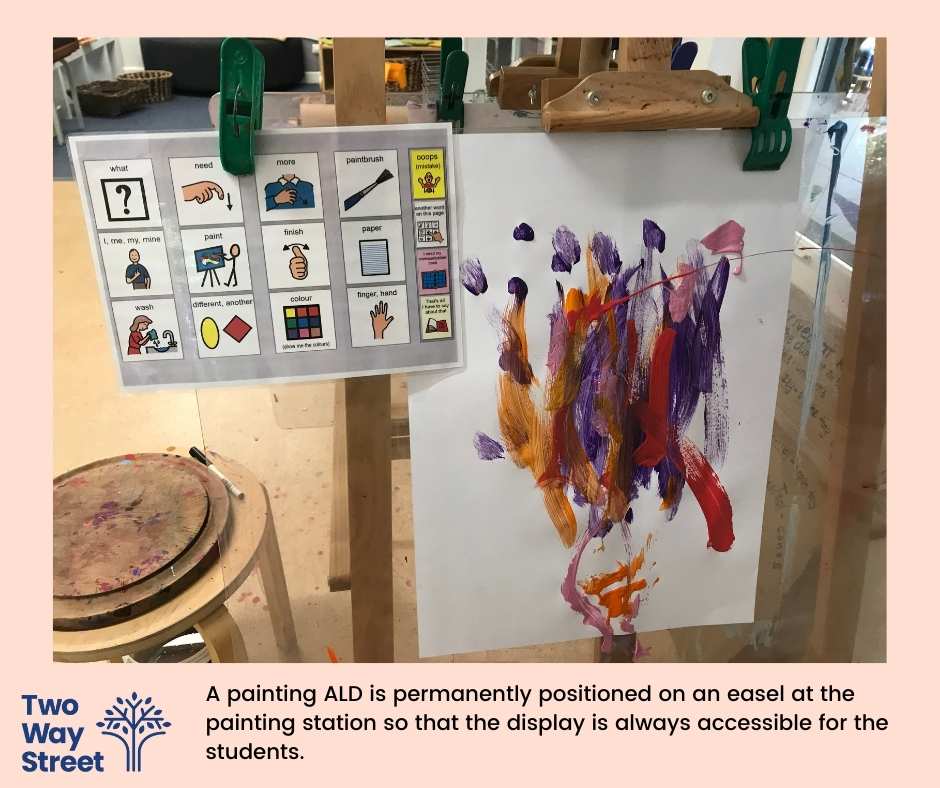
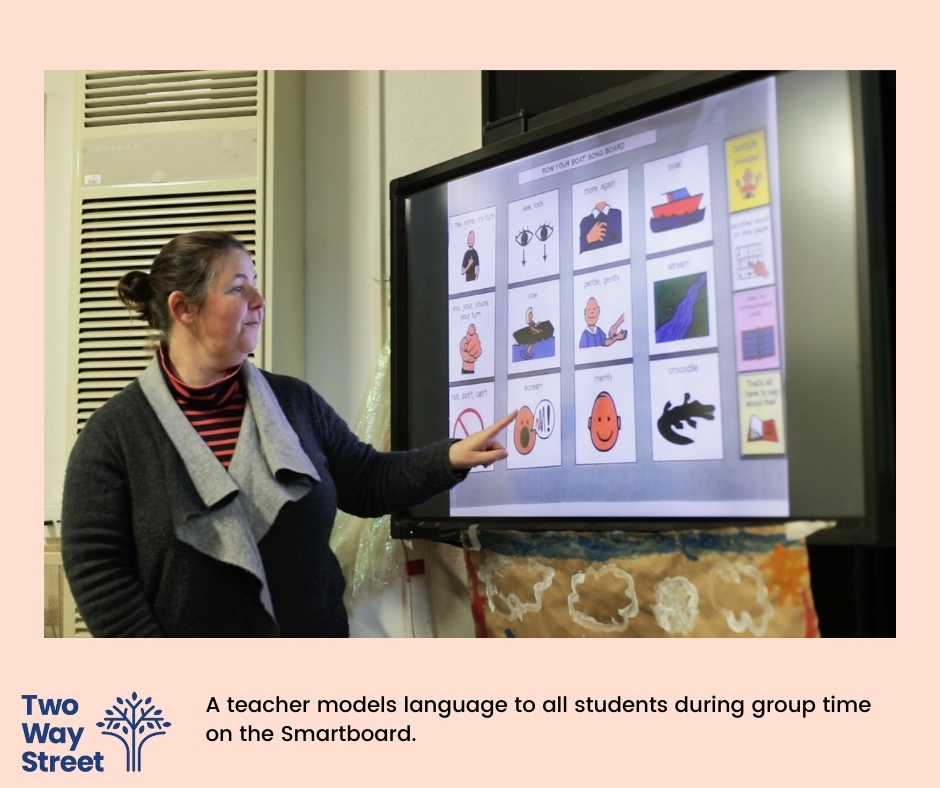
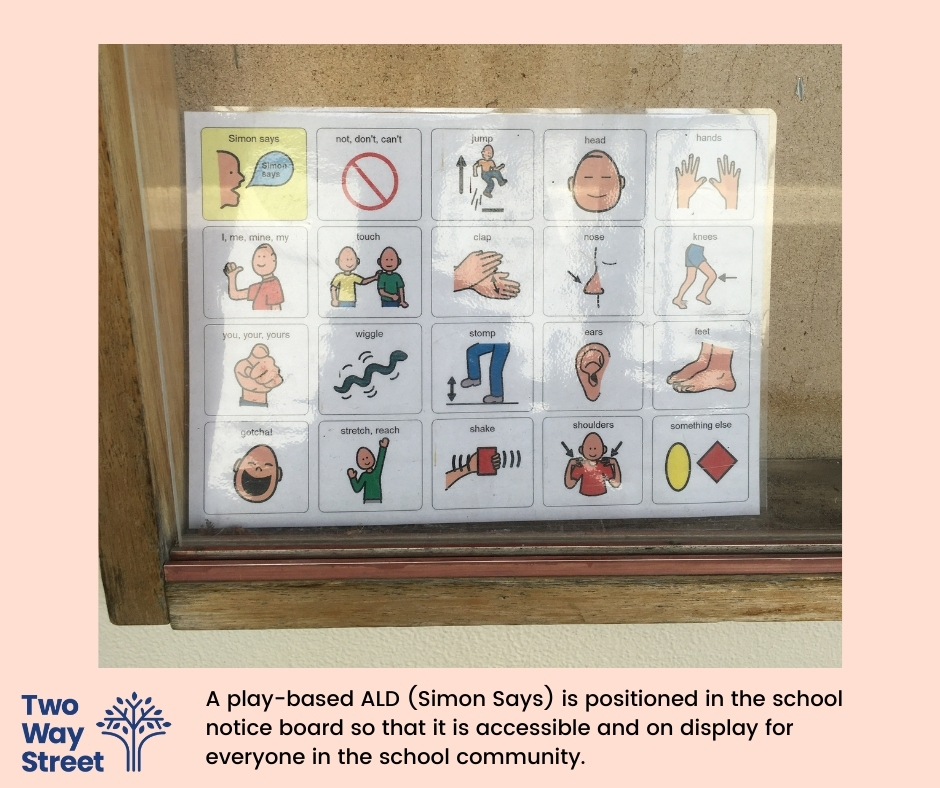
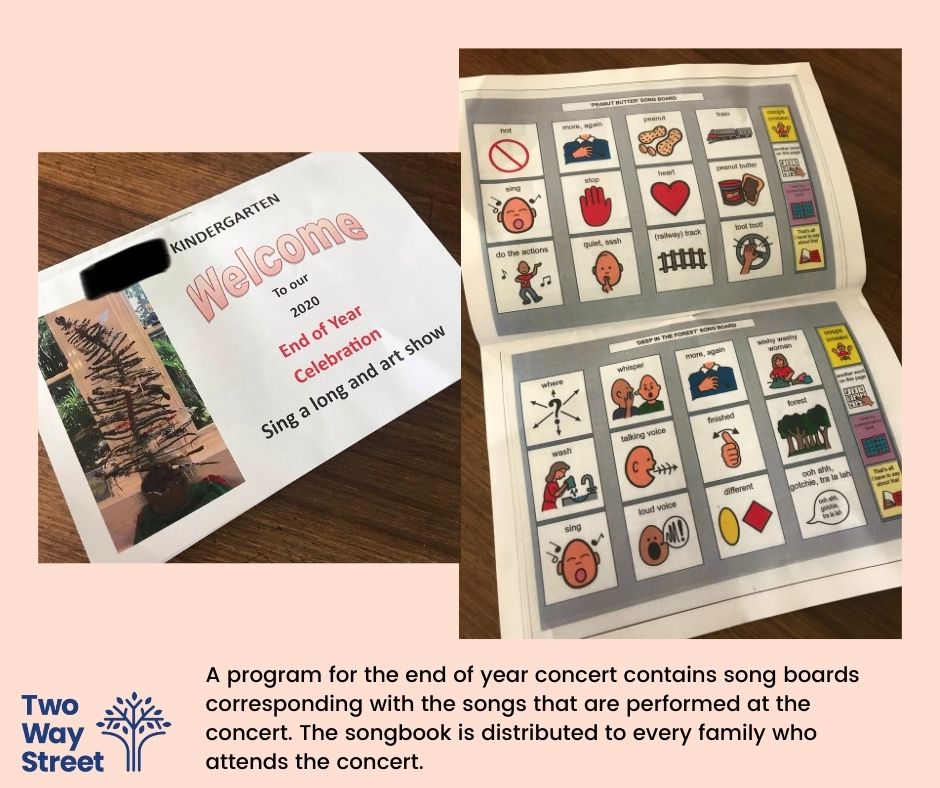
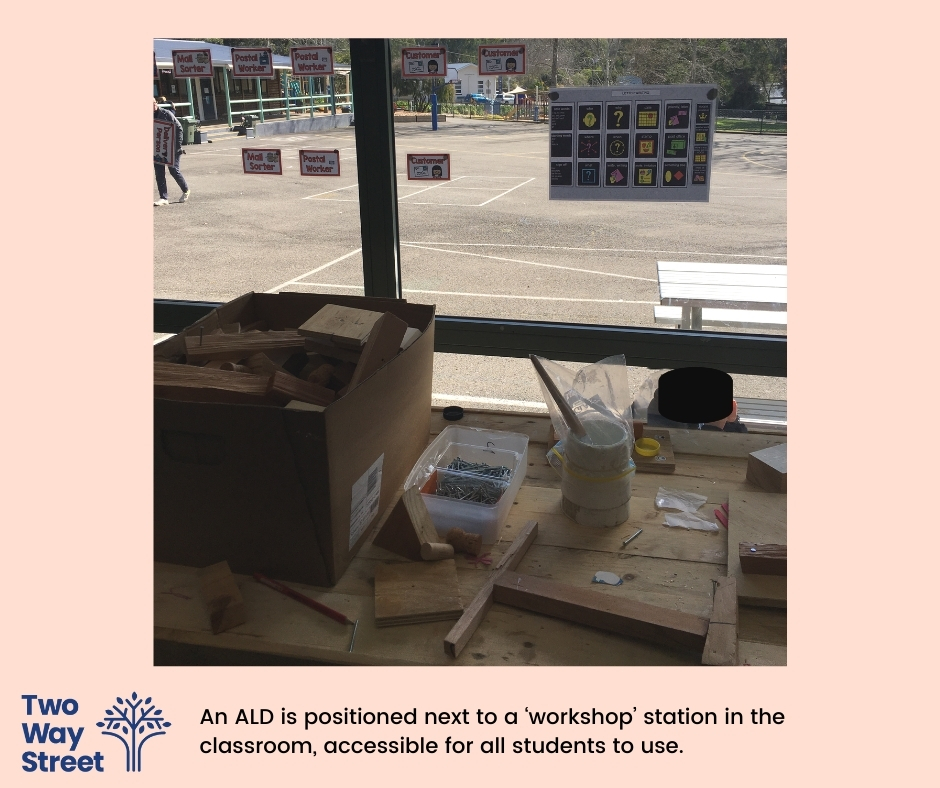
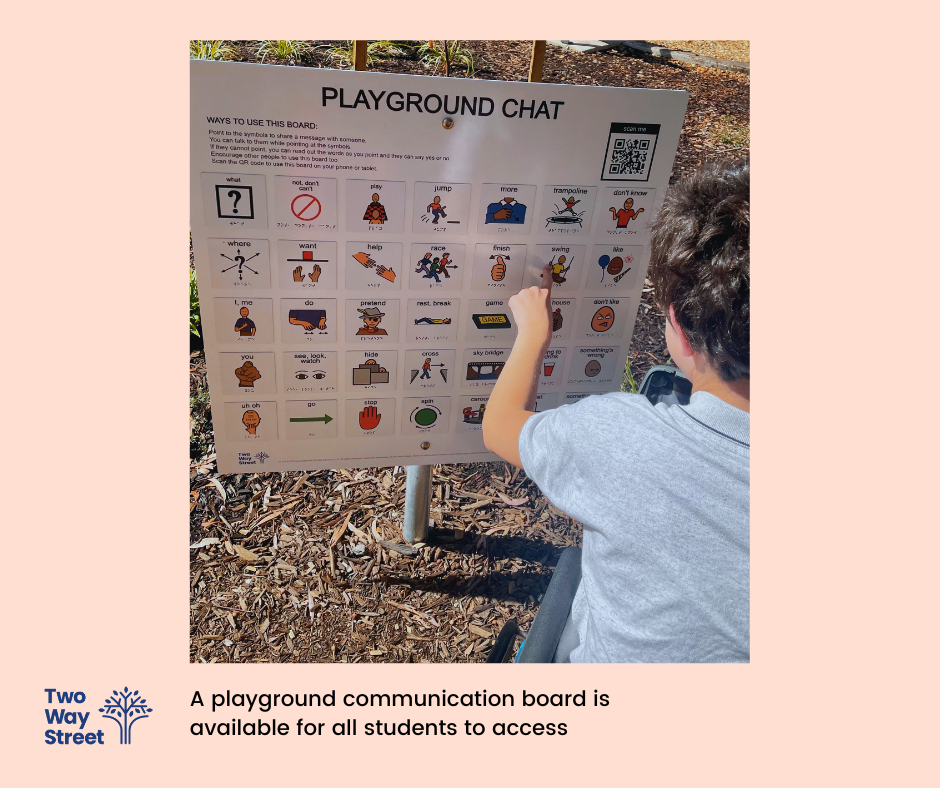
Embedding AAC tools within the environment is an important starting point in developing a sense of belonging for anyone who may prefer or benefit from their use. The next step is to inform and enable other people in the environment to use the communication tools during interactions. In schools, this should include everyone from the teachers, teacher aides, school administration staff, and perhaps most importantly, peers. Within community settings, Two Way Street can train customer service staff to understand how to use other methods of communication as well as strategies for respectful interaction. When other people value and use an individual’s communication system (or other AAC tools) while interacting with them, it implies to the person that how they communicate is important, that their voice is valued, and that they belong.
In schools, a formal peer training session can be a useful strategy in supporting students to develop familiarity with their peer’s communication system, and building their confidence in interacting with their peer. It is important to note that peer training sessions should be developed and run in collaboration with the individual and their family.
Activities in peer training sessions can include:
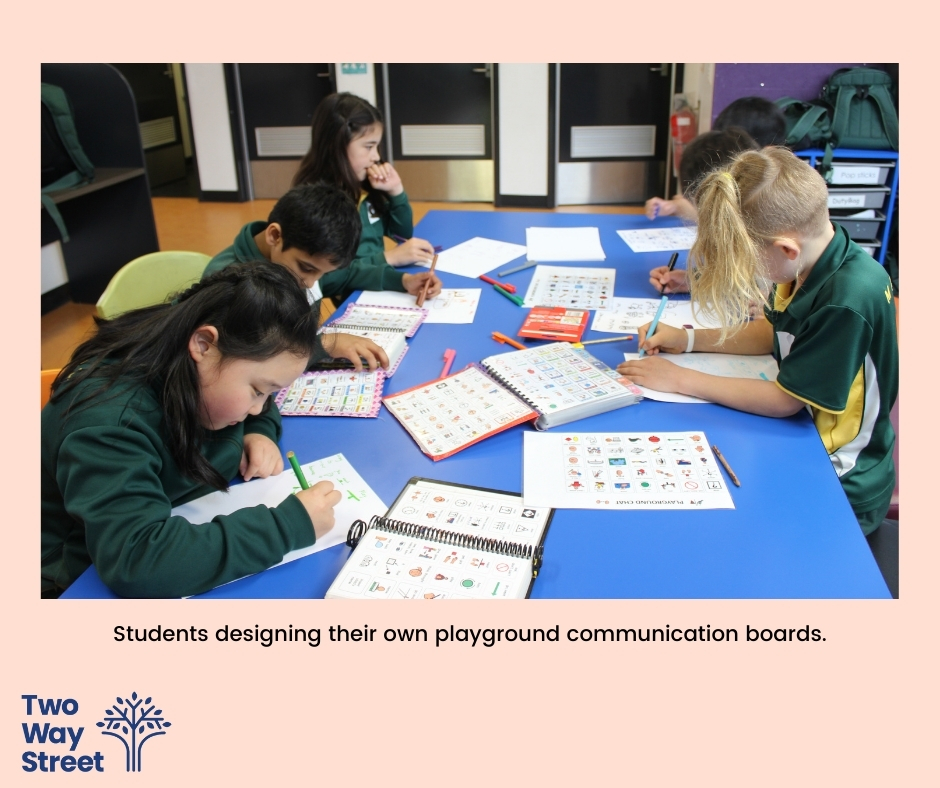
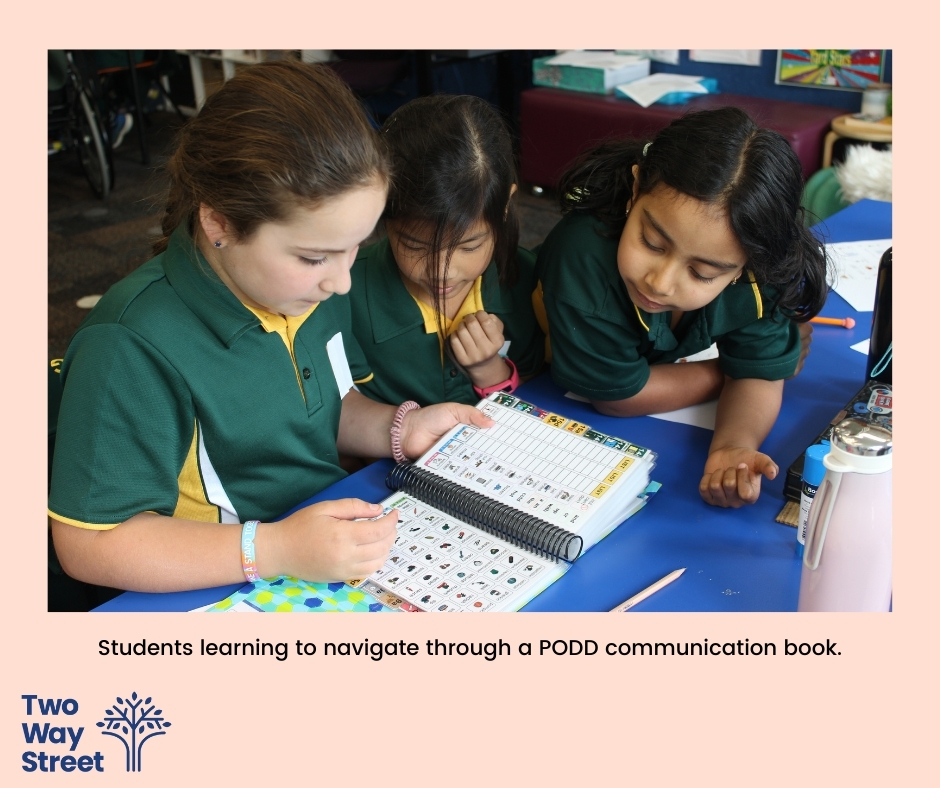
When people feel as though they belong, they feel accepted and valued by their community. It is therefore the shared responsibility of individuals within a particular community to embrace each and every child and person for who they are, and to recognise their own unique strengths. This also means valuing diverse methods of communication and by building a school or community that understands and embraces these methods. This will allow everyone to be who they really are; to belong, in their schools and communities. Because, to quote AAC user Sara Pyska, author of Inside My Outside,
“the feeling of being yourself with someone is priceless”.
To download free Aided Language Displays visit https://twowaystreet.com.au/online-learning-and-products/
For more examples of children who use AAC in inclusive settings, visit https://vimeo.com/showcase/8678812
For more information about building peer relationships for for beginning communicators in inclusive primary school settings, visit https://spaace.com.au/wp-content/uploads/2021/10/Building-Peer-Relationships-2021.pdf