Two Way Street Online
  • About
  • Solutions
  • Online learning & products
  • Workshops & events
  • Insights
  • Contact
  • Login
  • Search
  • About
    • What is AAC?
    • AAC User Lecture Series
    • Our team
  • Solutions
    • Individuals and families
    • AAC professional consultation
    • PODD service
    • Schools & Early Childhood
    • Communication Access
  • Workshops and events
    • Online learning & products
    • Insights
    • Contact
    • Login
  • Home
  • Categories
  • Uncategorised

This year, Two Way Street is celebrating a special milestone – 15 years of enabling people who need, prefer or benefit from using any form of AAC together with or in place of spoken language.

Since 2011, we’ve worked alongside individuals, families, educators, therapists, workplaces and organisations across Australia to build inclusive communication environments. Our work has always been grounded in a simple belief:

“To be heard and understood is a fundamental human right.”

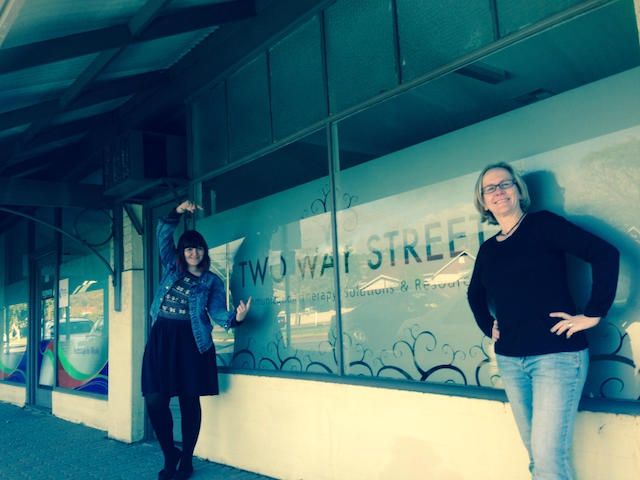
Photo of the Two Way Street office frontage with two smiling staff members standing outside pointing to the sign.
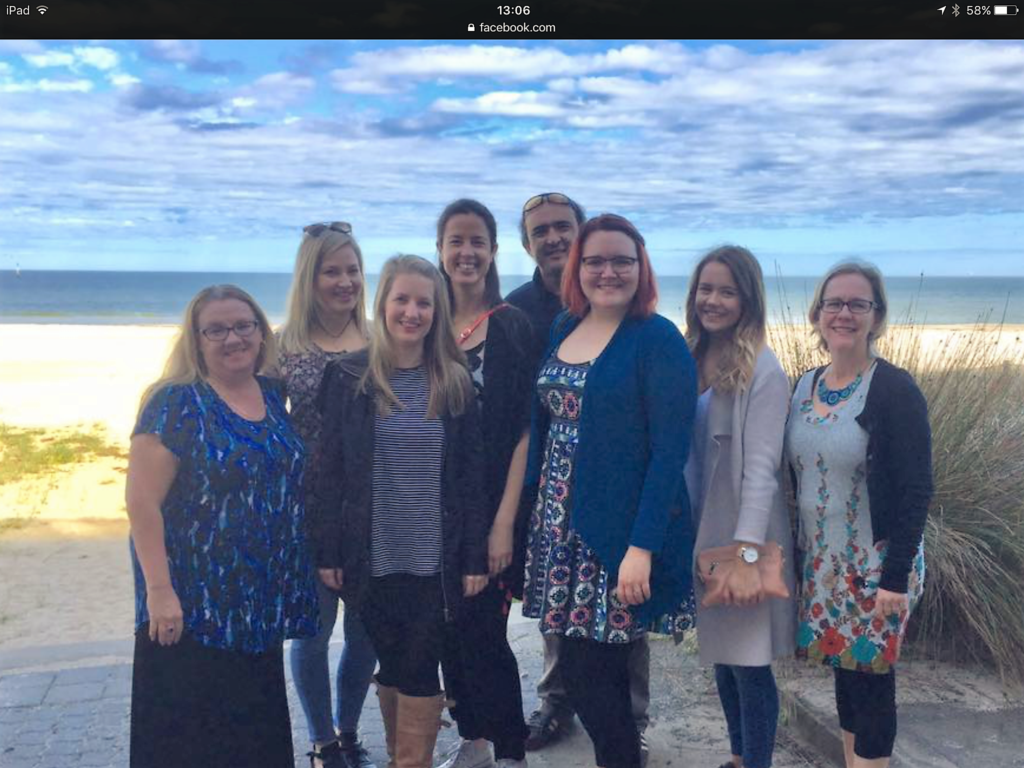
Photo of 8 Two Way Street staff members standing in front of the beach

For many people, accessing meaningful and individualised augmentative and alternative communication (AAC) supports can transform participation in everyday life, from learning and friendships to decision-making and independence.

While the journey hasn’t always been straightforward, our last 15 years have been filled with innovation, collaboration and countless moments where someone’s voice has been heard in a new way.

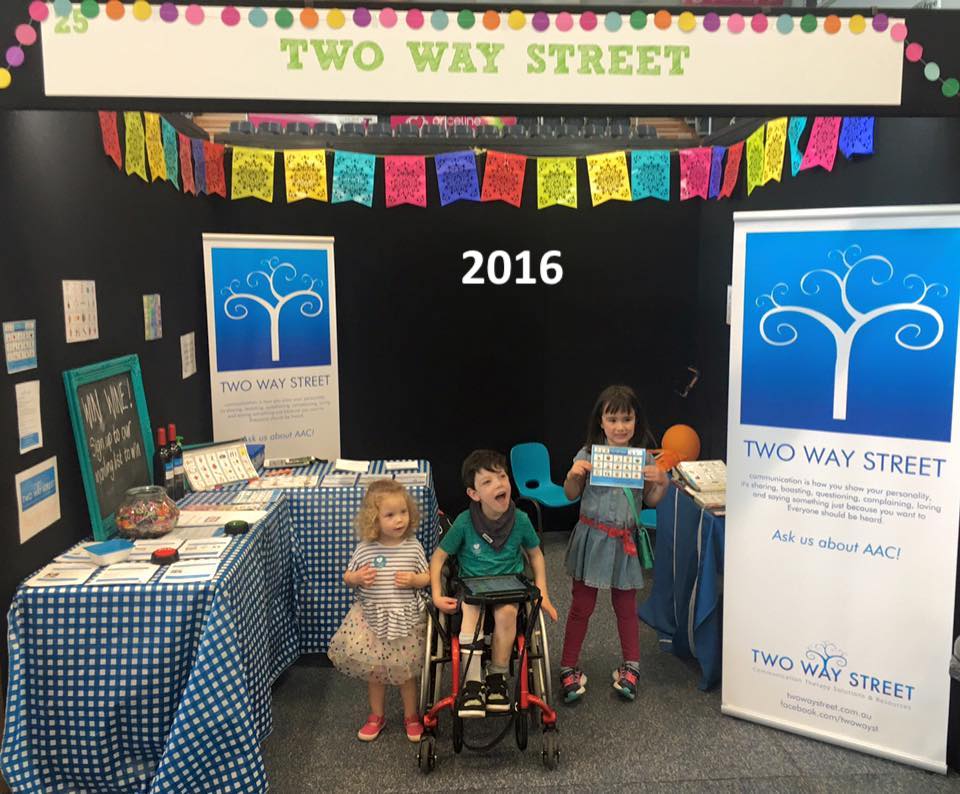
An exhibition booth featuring Two Way Street products and banners, with three children, one in a wheelchair, and one holding a communication tool. The photo is labelled 2016.
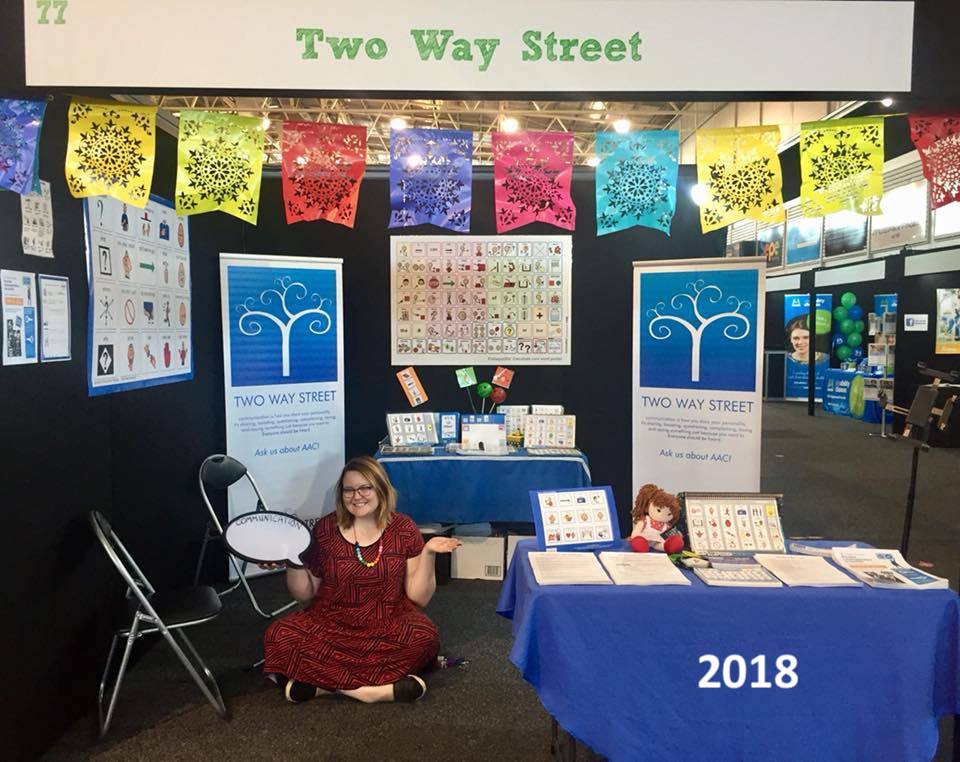
An exhibition booth featuring Two Way Street products and banners, with a Two Way Street staff member sitting on the floor holding a blank speech bubble. The photo is labelled 2018.
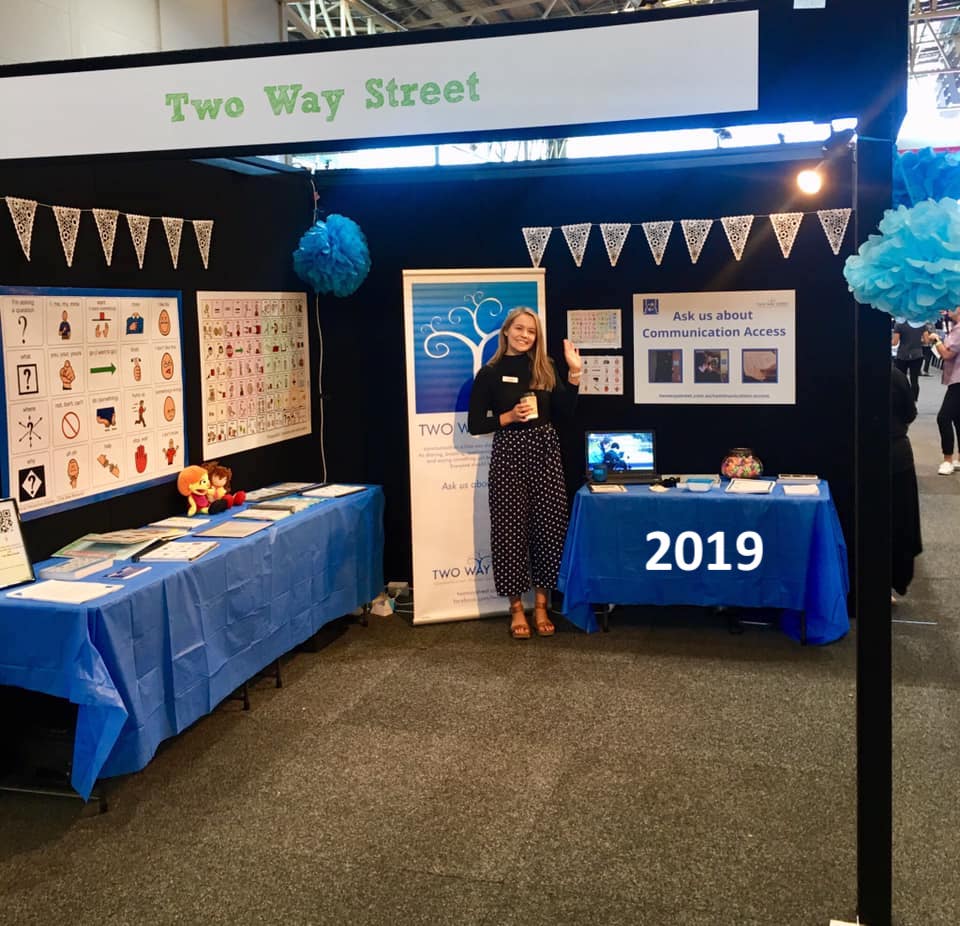
An exhibition booth featuring Two Way Street products and banners, with one Two Way Street staff member, smiling looking at the camera. The photo is labelled 2019.

The Beginning: A Different Vision for AAC Services

When Two Way Street was founded in 2011, the goal was never simply to deliver traditional therapy services.

From the beginning, our vision was broader – to enable communication solutions for real life, not just in therapy sessions and to view communication beyond the individual to include their people, their places, and their communities.

In the disability sector, particularly within the NDIS environment, funding has predominantly been structured around individual one-to-one therapy. While therapy can be incredibly valuable, we know that communication is a Two Way Street and without an accessible world, the communication disability remains. 

People who use AAC systems thrive when the people around them are confident communication partners, and environments are inclusive and welcoming.

This insight has shaped everything we do.

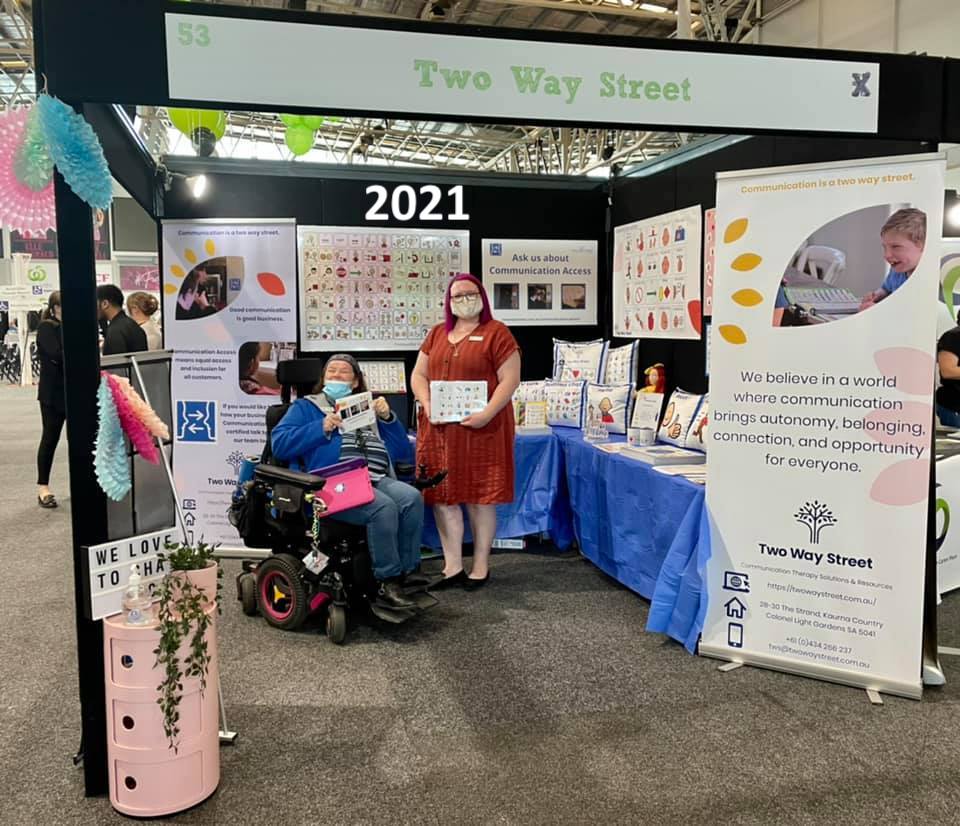
An exhibition booth featuring Two Way Street products and 2 staff members holding communication tools. The photo is labelled 2021.
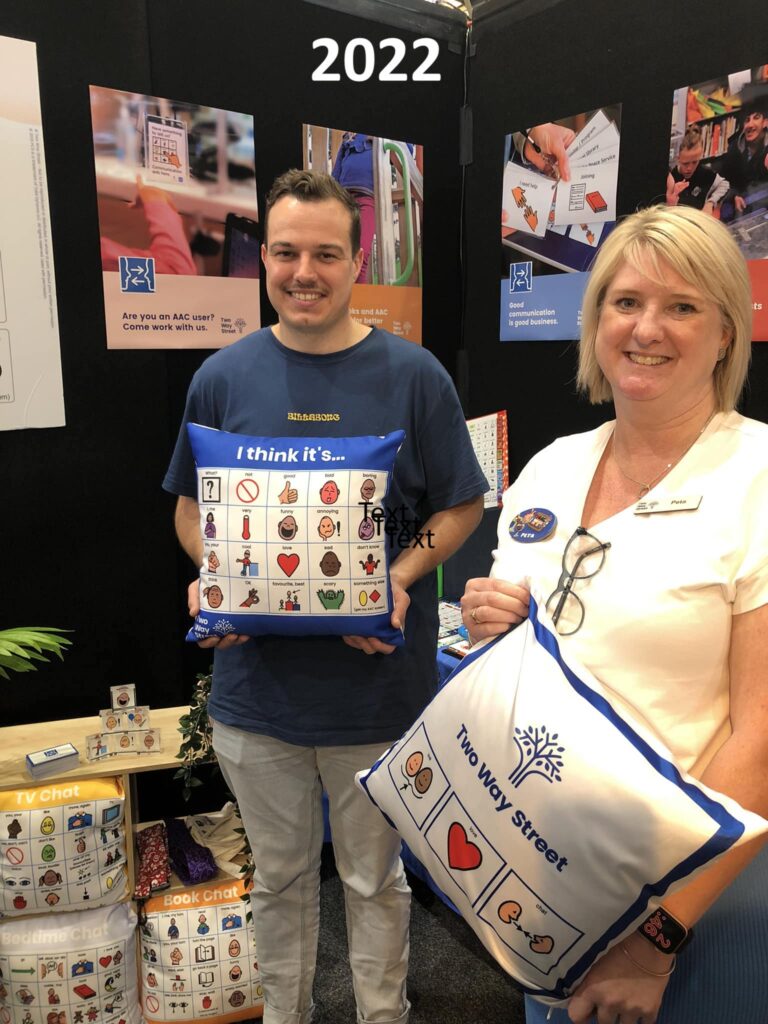
An exhibition booth featuring Two Way Street products and posters, with 2 staff members holding AAC chat cushions The photo is labelled 2022.

Expanding the Model Beyond 1:1 Therapy

Over the past 15 years, we have intentionally expanded our services beyond individual therapy because a communication disability can be related to any part of the process – environment, processes, topics, partners, attitudes, knowledge and skills. 

We have focused on capacity building, education, resources and community development so that inclusive communication becomes embedded in everyday environments.
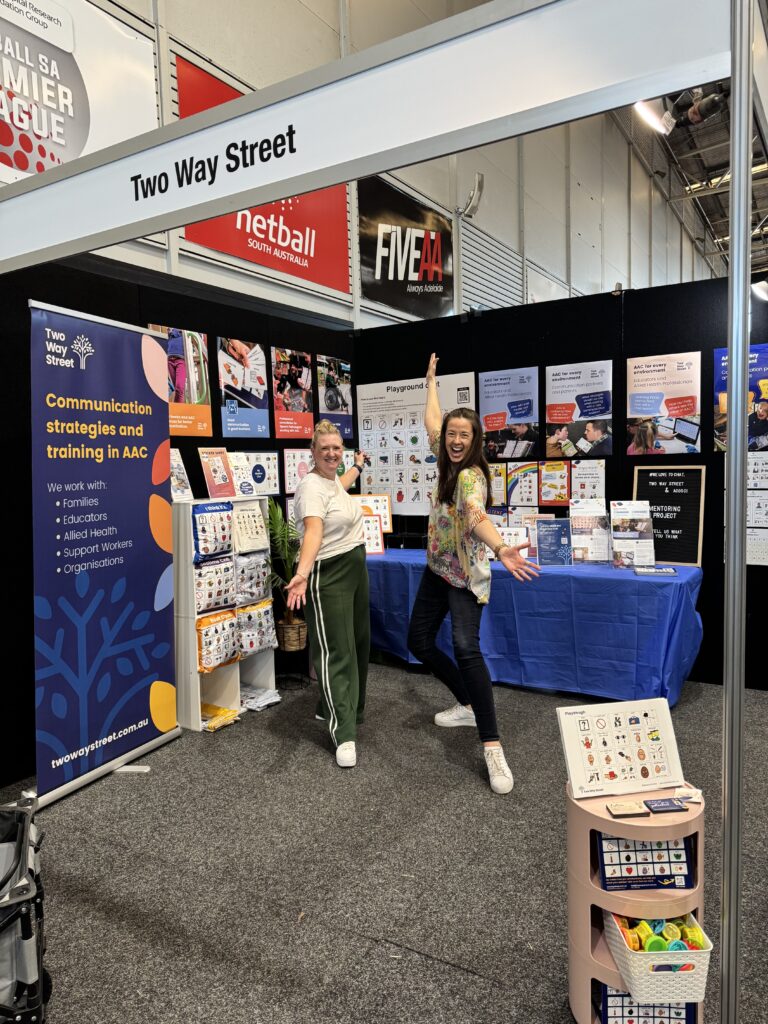
Today, our work includes but is not limited to:

  • Consultancy for businesses and organisations seeking communication access and inclusion
  • AAC training and workshops for therapists, educators, families and support teams
  • AAC training and speech pathology support for schools, preschools and early childhood settings
  • Mentoring and consultation to speech pathologists
  • Community programs and initiatives that turn inclusive communication into real opportunities for participation and connection
    • https://twowaystreet.com.au/mentoring/ 
  • Online courses and professional development for communication partners
  • AAC resources and communication tools used across Australia and internationally

These initiatives are all part of our vision of a world where communication brings autonomy, belonging, connection and opportunity for everyone.

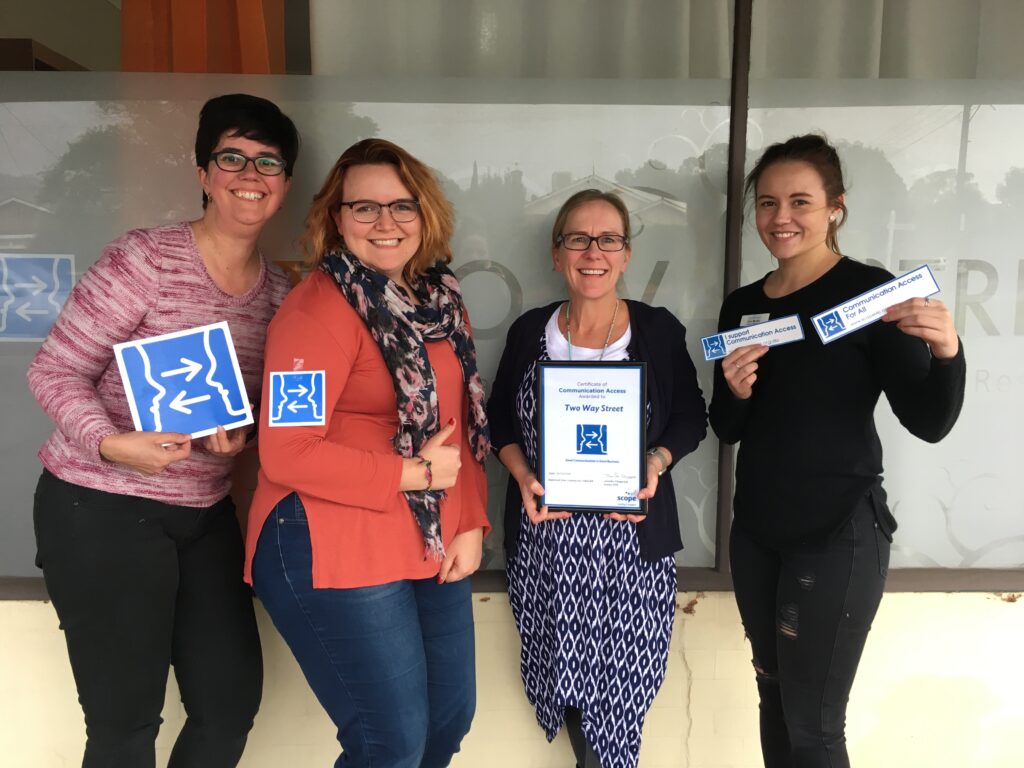
Photo of 4 smiling Two Way Street staff out the front of the Two Way Street office all holding various forms of the communication access symbol and accreditation documentation
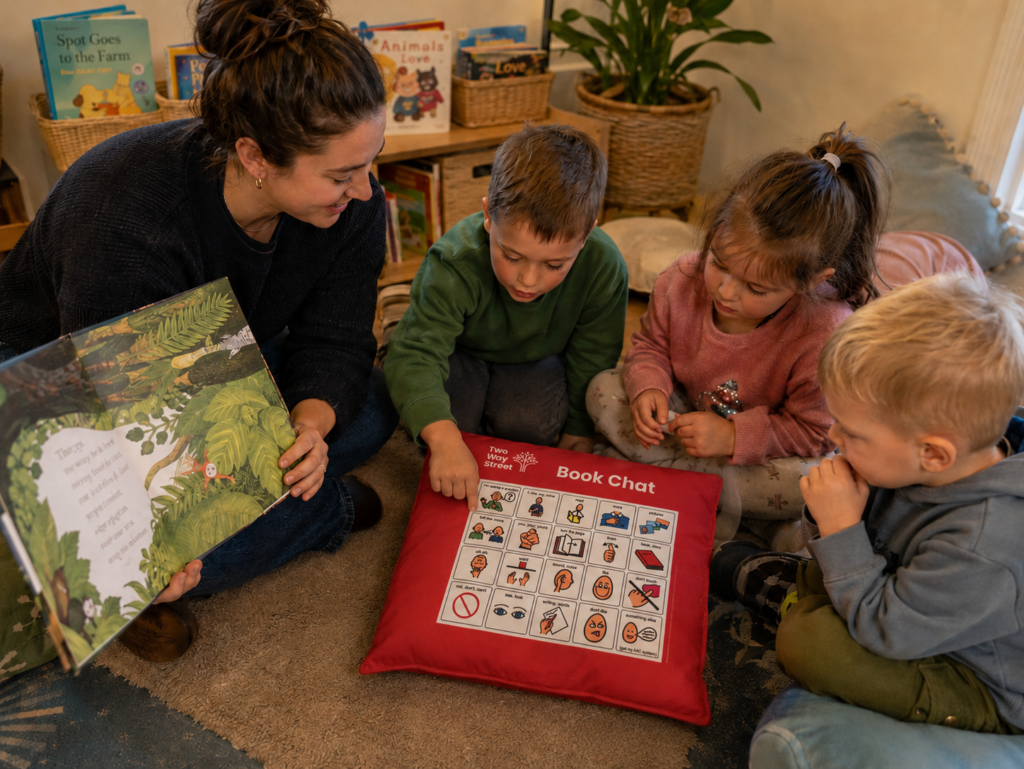
A Two Way STreet staff member holding up and pointing to a symbol in a PODD book, sitting in a classroom with students, teachers and support people, all with their own PODD books

Navigating the NDIS and Changing Systems

Over the past decade, the introduction of the National Disability Insurance Scheme (NDIS) has reshaped the way disability services are delivered in Australia.

While the NDIS has created many opportunities for people to access services, it has also created challenges for innovative programs that don’t always fit neatly into traditional funding structures.

At Two Way Street, we’ve been navigating these systems while continuing to pursue a bigger vision. Sometimes that has meant taking risks. Sometimes it has meant building programs before funding models existed to support them. 

But throughout it all, our focus has remained clear:
Ensuring people who need, prefer or benefit from methods other than spoken language have the opportunity to express themselves and participate meaningfully in everyday life.

Our Big Hairy Audacious Goal

At the heart of Two Way Street is what we often refer to as our BHAG — Big Hairy Audacious Goal.

That goal is to create a world where real communication inclusion is the norm, not the exception.

Where schools, workplaces, community services and public spaces understand how to include and enable ALL people.

Where communication partners are confident. And where everyone can participate fully in society.

While we still have work to do, the progress over the past 15 years has been incredible.

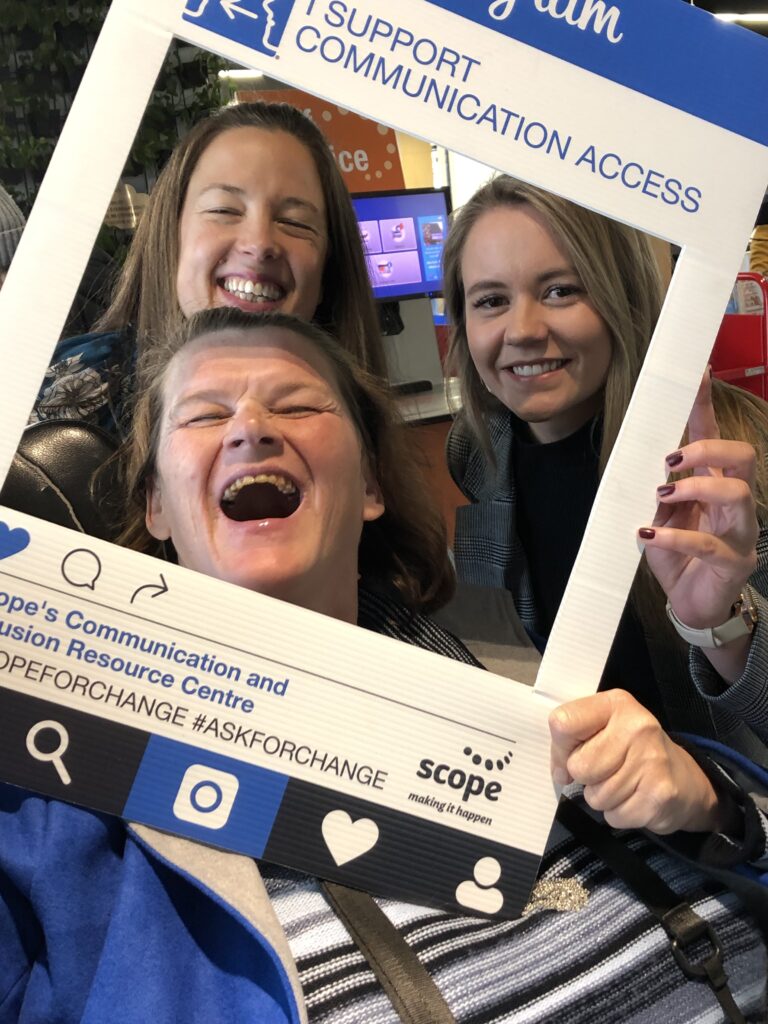
Picture of three smiling Two Way Street staff members, their faces peering through a white cut out frame that says 'I support communication access'.
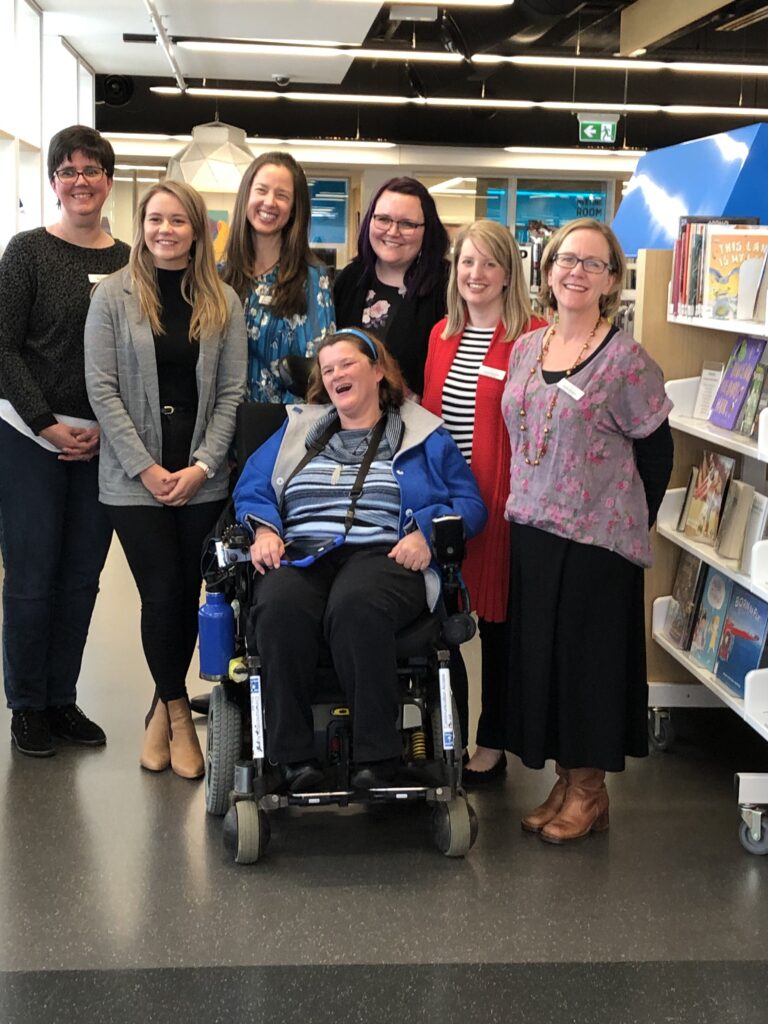
Photo of 7 smiling Two Way Street staff members in a library
Photo of a colourful Two Way Street exhibition booth with two staff members, arms-wide, showing their product display

Celebrating the Community Behind Two Way Street

Two Way Street has never been just about a business or a service.

It has always been about a community of people committed to communication inclusion.

Over the years we’ve had the privilege of working alongside:

  • people who need, prefer or benefit from using AAC systems
  • their families and their people, enabling inclusive communication in daily life
  • dedicated speech pathologists and other allied health professionals providing communication support
  • educators exploring universal design to support all students
  • organisations advancing communication access and inclusion initiatives
  • councils and community groups designing accessible public spaces and programs

Each partnership helps turn inclusive communication from idea into everyday practice – creating real opportunities for everyone to be heard, understood and included. 

Looking Ahead: The Next 15 Years

While we’re proud of what has been achieved so far, we know the journey is far from over.

The next chapter for Two Way Street will continue to focus on:

  • universal design for communication inclusion
  • expanding opportunities for people who need, prefer or benefit from AAC to participate with their people and within their communities
  • expanding AAC training and education
  • building communication-inclusive communities
  • continuing to develop innovative AAC resources and tools
  • supporting organisations to improve communication accessibility
  • empowering more people to become confident communication partners
  • Advocating for awareness, understanding and change

Because when communication is accessible, everyone benefits. It’s a Two Way Street!!

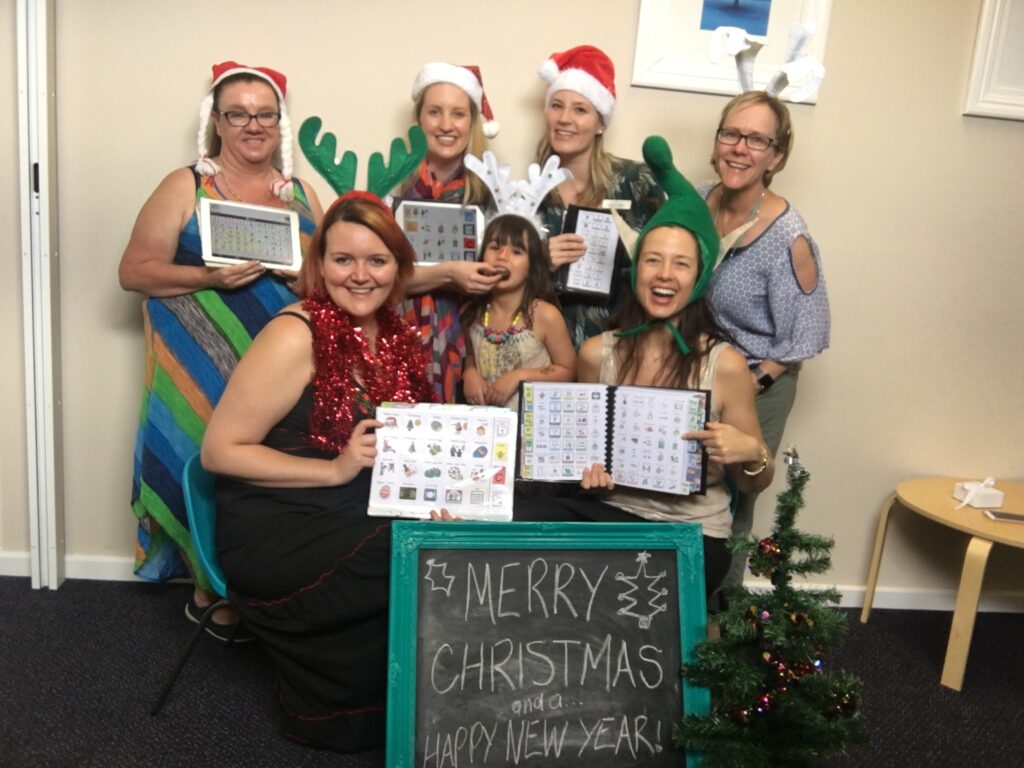
Picture of 6 of the Two Way Street team, with Janelle's daughter wearing Christmas hats, holding various communication tools with a blackboard sign saying Merry Christmas and a happy new year.
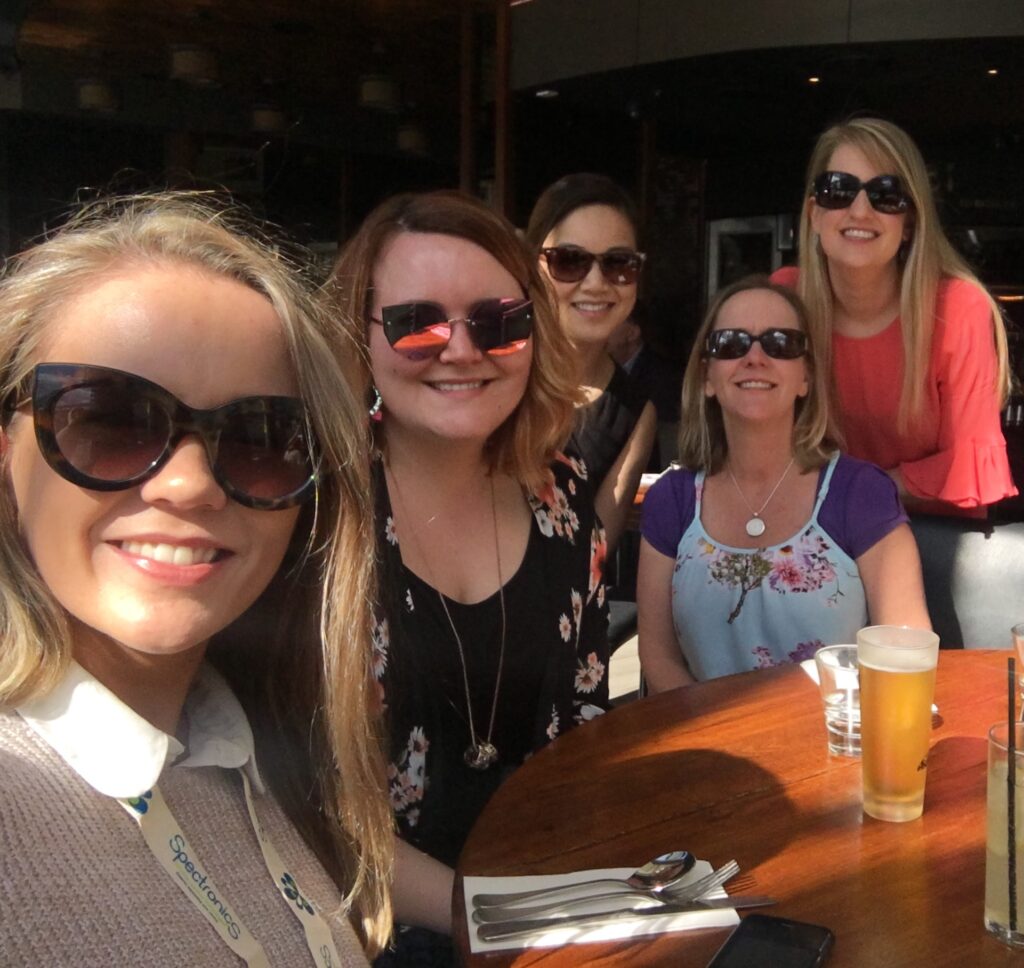
Photo of 5 Two Way Street staff members all wearing sunglasses, sitting at a table of a restaurant, smiling at the camera

15 Things We’ve Learned in 15 Years of Two Way Street

Over 15 years as a team, and with decades of experience between us, we’ve learned that the real value isn’t in what we each bring, it’s in what we build together.

Our clients, their families, our customers and colleagues have all shaped these lessons alongside us.

Here’s just some of what we’ve learnt that continues to shape our work every day.

1. The right to be heard and understood. Communication is how we honour that.
Everyone deserves the opportunity to be heard, understand others, and participate authentically in the world around them.

2. Communication happens everywhere.
The most meaningful communication happens in everyday environments with the people we love and know within them – at home, in classrooms, at the playground, or out in the community.

3. AAC solutions work best when everyone around the person is involved.
Respectful communication partners who value and respond to their person’s voice are more important than the communication system itself.

4. Therapy is only part of the picture.
True communication learning happens when it is enabled, supported and expected consistently across daily life. Our role is to make therapy redundant as a person is enabled within their environment to interact effectively with their preferred or necessary partners. 

5. Communication methods and messages can take any form
As long as a message is exchanged successfully between 2 or more partners, it is considered communication. It’s not the method that matters, but the message that counts. 

6. Confidence grows with practice and opportunity.
The best way to learn to communicate and interact, is to communicate and interact (with partners who scaffold your success).

7. Communication should never be limited by the environment.
When multi-modal communication supports are embedded into schools, workplaces and community spaces, participation increases for everyone.

8. Small changes can make a big difference.
Something as simple as a communication board or visual support can open up opportunities for connection.

9. Inclusion requires intention.
Creating communication-accessible environments doesn’t happen by accident…  It happens when people prioritise it.

10. Families and support networks are powerful advocates.
The progress we see is often driven by the dedication of families and teams who believe in their people and inclusive communication.

11. Education and training matter.
When teachers, therapists, support workers and organisations understand AAC and its true purpose, communication opportunities grow exponentially.

12. Collaboration is essential.
The best outcomes happen when professionals, families and individuals share and collaborate together.

13. The community is part of the communication team.
Councils, organisations and public spaces all have a role to play in creating communication-inclusive environments.

14. Progress takes time.
Building communication confidence and inclusive systems is a journey, and every small step matters.

15. We’re just getting started.
After 15 years, our vision remains the same: we believe in a world where communication brings autonomy, belonging, connection and opportunity for everyone.

Celebrate 15 Years With Us

To celebrate 15 years of Two Way Street, we’ve curated a birthday bundle, making this a unique opportunity to to access some of our most-loved products all in the one place, for a limited time.

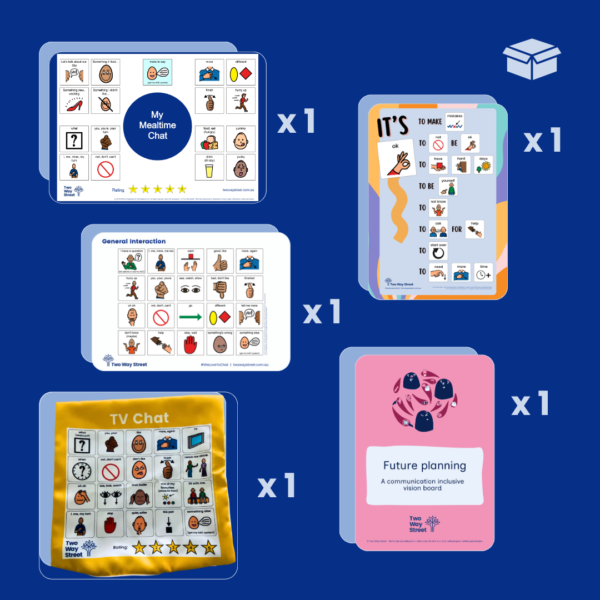
The bundle was designed around the simple idea that communication happens everywhere. Featuring mealtime and TV time chat products, a double-sided communication board for general interaction, a poster to support inclusion, a vision board activity book to complete together and access to our most valuable online course – The Emerging Communicators.

The TWS 15-Year Birthday Bundle enables communication where it matters most… in everyday moments. Only available until 30 June 2026!

👉 Explore the bundle here: https://twowaystreet.com.au/product/2026-tws-15-year-birthday-bundle/

Blue image featuring a mock up of the mealtime mat, the general interaction ALD, the It's OK poster, the TV chat cushion and the Vision Board Activity Booklet, showing x 1 next to each.

And if you’ve been part of the Two Way Street journey over the past 15 years – whether as a client, partner, participant or supporter – thank you.

We couldn’t have done it without you. It really has been a Two Way Street.

Frequently Asked Questions about AAC

AAC refers to tools and strategies that enable people to communicate using methods alongside or in place of spoken language. This can include body language, sign, gestures, vocalisations, communication books such as PODD, communication boards, speech generating devices, and other methods that help people to express themselves or to understand others. 

AAC can enable children and adults with a range of communication disabilities, including autism, cerebral palsy, developmental disability, acquired brain injury and other conditions that affect speech. People may need or prefer to use AAC instead of spoken words, and others may use it alongside to clarify, expand or elaborate their message, as well as to enable understanding of spoken language. AAC may not be for everyone, but is for anyone.

Communication inclusion ensures that all people are welcomed, valued and can participate fully in education, work, healthcare and community life, and that these opportunities do not rely on the ability to express or understand spoken language.

  • Home
  • Categories
  • Uncategorised
Blog article Building communication-inclusive early learning environments with visual and multi-modal supports

In early childhood education, communication underpins everything: learning, friendships, emotional regulation, and participation.

Yet many early learning environments are still built on a foundation of spoken language as the primary method of communication. For children with communication disability, developmental delay, neurodivergence, emerging language, or multilingual backgrounds, this can create significant barriers.

When children cannot reliably understand what is happening around them—or cannot make themselves understood—frustration, withdrawal, and missed learning opportunities often follow.

This is why early intervention speech pathology becomes most powerful when it extends beyond the individual child and into the environment itself.

Instead of asking “How do we fix the child?”, communication-inclusive practice asks:

How do we design early childhood environments so every child can understand and be understood?

What communication-inclusive early childhood environments look like

Communication-inclusive early childhood settings recognise that children communicate in many ways. Educators may see communication through:

  • Speech
  • Gesture and body language
  • Facial expression
  • Visual supports
  • Signs
  • Aided Augmentative and Alternative Communication (AAC) symbol boards, books and devices for emerging or developing language

Drawing on evidence from Augmentative and Alternative Communication (AAC), visual supports are a powerful way to enable multi=modal communication, so all children have more opportunities to participate, connect and learn.

This is where training and coaching for early childhood educators from speech pathologists experienced in AAC and multi-modal communication can make a significant difference.

Universal Design for Multi‑Modal Communication: opportunity before accommodations

Many services are familiar with making accommodations once a child is identified as needing support.

While these supports are important, they often come after barriers have already impacted participation. Universal design for multi‑modal communication takes a different approach.

Instead of waiting to respond to challenges, educators design communication environments that support multiple ways of communicating from the beginning.

When environments are intentionally designed, this may include:

  • Visual supports alongside spoken language to enhance comprehension
  • Communication boards available during everyday routines
  • Acknowledging and responding to any method of communication
  • Modelling use of multiple communication methods as part of natural interactions

When these supports are universal, children who use (or could benefit from using) AAC or visual supports are not different—they are simply participating.

How coaching and strategies from speech pathologists builds educator confidence

Professional development workshops are valuable, but ongoing coaching and training is what enables real change in early childhood settings.

Our speech pathology team can support educators to:

  • Build confidence using visuals alongside of spoken language in childcare and kindergarten settings
  • Understand why multi-modal communication strategies work
  • Reflect on their environment through a communication‑inclusion lens
  • Embed strategies consistently across routines, rooms and staff

Rather than adding extra work, our coaching approach helps educators integrate communication strategies into what they already do every day.

How visual supports, with coaching, can improve early learning outcomes

AAC tools and strategies are often misunderstood as something used instead of speech or only for a small cohort of children.

In reality, AAC supports language development, participation and social interaction for many children in early learning environments.
When educators receive coaching and strategies for inclusive communication in early childhood, they can enable:

  • Greater engagement during group times for all children
  • More successful transitions between activities
  • Reduced communication‑related distress
  • Stronger peer interaction and inclusive play
  • Improved understanding of routines and expectations

Most importantly, educators learn how to model AAC naturally, ensuring children see communication tools used meaningfully throughout the day.

Building educator capability rather than dependence

A key goal of coaching‑based speech pathology support is sustainable change.

Rather than relying on external professionals, educators develop the capability to:

  • Notice the impact of visual support for language within their own environment
  • Adapt communication supports in the moment
  • Select and use appropriate communication tools and strategies
  • Advocate for communication inclusion within their service
  • Identify children who may prefer or benefit from visual language to enhance their comprehension or expression before challenges arise.

This approach aligns with sector priorities around inclusive early childhood education, capacity building, and best‑practice early intervention.

Practical change: starting small and building momentum

Inclusion can feel overwhelming when it is framed as a large system change.

Effective coaching focuses on shrinking the change so that teams can build confidence gradually.

Early childhood services may begin with:

  • Easy wins to get started (for example mealtimes, group time or outdoor play)
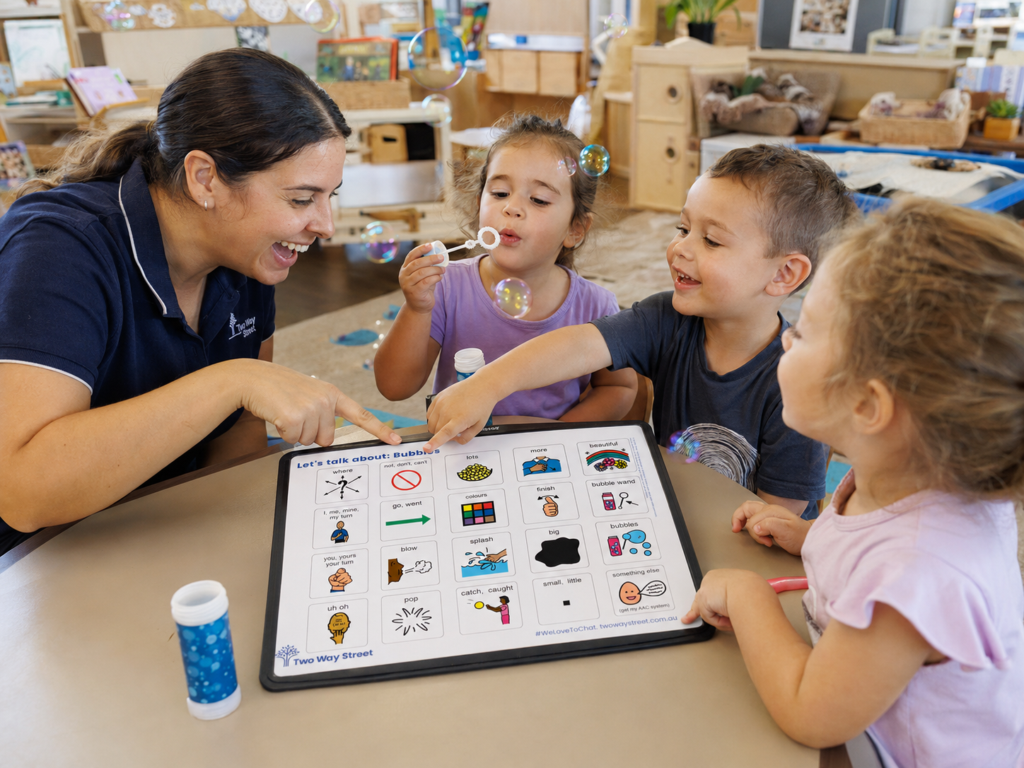
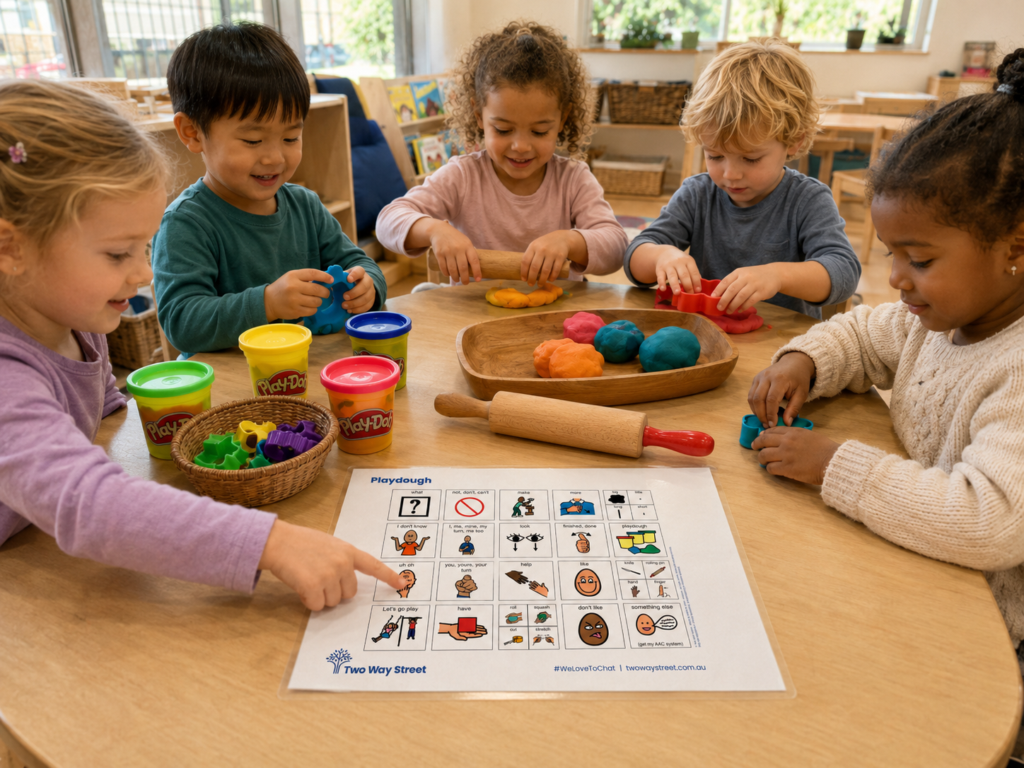
  • Simple tools (such as a visual schedule and activity based communication boards)
  • Natural interaction strategies (such as watching, pausing, or pointing to symbols while you speak )

Small changes compound over time, gradually creating environments where communication inclusion becomes part of everyday practice.

How Two Way Street supports early childhood settings

Two Way Street is a speech pathology practice based in Adelaide specialising in meaningful and inclusive communication outcomes. We promote the inclusion of visual communication support for anyone who needs, benefits from, or prefers to use or include methods other than speech to communicate.

Our team partners with early childhood settings to deliver:

  • Training in visual supports and multi-modal communication for educators and teams
  • Coaching to embed communication‑inclusive practice
  • Consultation on communication inclusive environments
  • Support implementing multi‑modal communication systems and strategies

The goal is not only to provide tools, but to help services build environments where every child can participate, understand and be understood.

Creating communication‑inclusive futures

When early childhood settings prioritise communication inclusion, the benefits extend far beyond the early years.

Children who grow up in environments where communication is accessible are more likely to develop:

  • Confidence expressing themselves
  • Stronger relationships with peers
  • Greater independence and autonomy
  • Lifelong participation in learning and community life

Coaching and communication-inclusive strategies from experienced speech pathologists helps early childhood educators build these environments, creating opportunities for every child before barriers appear.

Communication inclusion starts with everyday practice

At Two Way Street, we see when educators are supported with the right training, tools and strategies, communication becomes something that works for every child.

Creating communication-inclusive settings doesn’t require a complete overhaul. It starts with one routine, one strategy, one shift in how we share and receive messages. Over time, these changes build environments where children can participate, connect and truly belong.

If you’re ready to strengthen communication in your early learning setting, we’d love to help. Whether you’re a centre leader, educator, or allied health professional, Two Way Street can support your team through:

  • Training in visual supports and multi-modal communication for early childhood teams
  • Practical coaching to embed strategies into everyday routines
  • Ready-to-use communication tools designed by experienced speech pathologists
  • Bespoke implementation and centre-wide support to help you build a communication-inclusive environment

Start your inclusive communication journey today:

👉 Explore training options

👉 Discover communication tools for your setting

👉 Learn about tailored support for your team

👉 Contact our team


  • Home
  • Categories
  • Uncategorised
Blog article from workshop to whole-school change: a journey towards inclusive communication

At Two Way Street, we’re passionate about creating environments where every person can communicate with confidence. A recent story from Claremont Special School really captures that spirit.

As part of an ongoing commitment to ensuring every student’s voice is heard and they have access to inclusive, multi-modal communication, each year Claremont Special School sends groups of staff to attend a 2 Day Introductory PODD workshop.

By attending these workshops, we hope that our staff return with stronger confidence, knowledge and practical skills to integrate AAC into their everyday interactions. Ultimately, it’s about empowering staff to use AAC more naturally and consistently, so that every student has more opportunities to communicate throughout the day.The consistent investment in learning has sparked a ripple effect that goes far beyond the classroom walls.

Empowering educators through PODD training

The Pragmatic Organisation Dynamic Display (PODD) system is one of the most widely used tools in the world of Augmentative and Alternative Communication (AAC). It supports people with communication disability to express themselves using symbols, words and visual layouts that promote natural and autonomous communication. For many attendees, these workshops offer ‘ahhaa’ moments in understanding how communication can be supported through natural interactions, modelling and everyday opportunities.

It was fascinating to learn the different ways and contexts in which the first two pages of PODD can be modelled! The quick chat pages have been a huge hit with all our staff and students. They’ve been a fantastic entry point for encouraging more spontaneous and meaningful communication.


Workshops like this don’t just build technical skills, they build confidence. When educators value multi-modal communication and see how AAC systems can support genuine conversations and participation, they start to model it more often and more naturally. And that’s where the transformation begins. It really does become the child’s voice.

From workshops to whole-school practice

Back at Claremont, the lessons from the Introductory PODD workshop didn’t end when the certificates were handed out. Staff began looking for practical ways to embed AAC and PODD communication books into everyday routines and environments.
For many years, the school’s goal has been to ensure that students have access to language across the school landscape, wherever they go. They rolled out communication boards across classrooms, playgrounds and in new buildings. But they didn’t stop there!

Recognising that communication inclusion involves the whole community, Claremont has worked to ensure that all staff, including teachers, administrative team members and support staff have their own PODD book (complete with strap to take it anywhere!). This simple yet powerful step ensures AAC is not confined to a classroom setting, but becomes a shared language across the school.

The rise of the PODD Breakfast Club

One of Claremont’s most successful initiatives has been the PODD Breakfast Club. The idea came directly from staff feedback and was designed to be a low-pressure environment, where staff support each other while practicing to use a PODD communication book over their morning cuppa.

It’s about empowering staff to use AAC naturally and more consistently, so that every student has more opportunities to communicate throughout the day.

This informal space has been key to building confidence and community. Staff report that it’s helped demystify AAC and made PODD use feel less complex and more achievable.

When asked how such initiatives impact school culture, staff have reported a positive communication and inclusion culture across the school. It’s created a positive buzz that Claremont endeavors to build on.

A culture shift towards inclusive communication

Since embedding AAC more intentionally across the school, Claremont has seen a clear shift in culture. The team explains:

We’re seeing an increase in communication across the whole school as staff feel more confidence using AAC and modelling PODD. It’s especially encouraging to see staff from across the whole school community embracing AAC as part of their everyday practice.

The result? A growing sense of empowerment and curiosity. Staff are asking more questions about how to support students’ voices and communication is becoming a natural part of every interaction, not an add-on.

When inclusive communication becomes a school-wide habit, it fosters connection, confidence and collaboration. It also models for students that communication can happen anywhere, with anyone, using multiple modes of spoken words, visuals, gestures or PODD books and AAC on devices.

Overcoming challenges and building confidence

Of course, creating a communication-accessible school hasn’t been without its challenges.

One of the biggest hurdles before the introduction of the PODD Breakfast Club was ensuring that all staff, including non-teaching and relief staff, felt confident and supported in using AAC when communicating around the school.

As the Claremont team describes “it’s not just about tool availability, but also about building confidence and supporting correct usage.”

This understanding is why they continue to prioritise hands-on practice, coaching and accessible professional development. The PODD Breakfast Club, targeted professional development sessions, and peer mentoring have all helped bridge this gap, creating a sense of shared learning and ownership.

Keeping momentum alive

In the everyday busyness of school life, it can be easy for new practices to fade, but Claremont has found ways to keep AAC front of mind.

When it comes to sustaining momentum, Claremont Special School believes that the need to provide space for ongoing practice and up-skilling in a low-pressured environment, as well as having AAC tools accessible in any environment is key.

The school also uses AAC Awareness Month as a time to celebrate communication, run fun activities and spark new engagement with students, families and staff.

These celebrations remind everyone that communication is everyone’s right and that AAC is for all communicators.

What’s next for Claremont

Looking ahead, Claremont plans to keep strengthening its multi-modal communication environment.

To support communication, Aided Language Displays’s are being added to more key areas of the school, such as lunch areas and bathrooms. They’re also gradually rolling out iPads with communication apps across classrooms to enable students to further express themselves. And importantly, they’re planning sessions with families providing the opportunity to learn more about AAC so that they can further support the communicative needs of their children.

Advice for others starting their AAC journey

When asked what advice they would give to other schools or professionals beginning their AAC journey, Claremont’s message is simple and powerful:

Don’t underestimate the importance of increasing knowledge and confidence – when you understand the “why”, the “how” becomes a lot easier! It’s okay to start small and build from there. Every step is a step in the right direction. Don’t forget to celebrate the simple successes!

Inclusive communication starts with one step

At Two Way Street, we see firsthand how small, intentional steps can transform communication culture in schools, workplaces and communities. Claremont’s journey shows that when you invest in your people, through training, mentoring and consistent support, you create environments where every voice can be heard.

If you’re ready to start your AAC or PODD communication journey, we’d love to help. Whether you’re an educator, a speech pathologist or service provider, Two Way Street can support your team through:

  • PODD and AAC workshops for teams or individuals
  • Ready to go communication tools designed by experienced speech pathologists
  • Mentoring and coaching from our experienced team
  • Custom AAC implementation and school wide support to help you build inclusive communication into daily routines

Start your inclusive communication journey today:
👉 Explore workshops available by request from Two Way Street
👉 View communication tools available online
👉 Contact our team


  • Home
  • Categories
  • Uncategorised
Inclusive Education insight article blog

What does inclusive education look like when you commit to including every child?

Building an inclusive learning environment is a commitment to recognising and addressing the diverse needs of every child. It also means creating an environment where all children feel welcome, valued and that they belong, without having to ask!

Being intentional in the set up of your learning environment will drive successful outcomes in engagement and positive behaviour. Children who experience an inclusive learning environment develop not only academically, but also socially and emotionally.

Just as inclusive architecture focuses on creating environments that are usable by all people – in education, resources and adjustments that may be a priority for some, can be used by all to enable opportunity.

These resources and adjustments encourage learning environments to:

  • provide information and content in various ways to accommodate diverse learning styles
  • offer various ways for students to engage with the content, which encourages motivation and interest
  • allow students to demonstrate their understanding in different ways, which recognises different strengths and preferences

When you minimise the barriers to learning and create an inclusive environment, ALL students are set up for success. This approach is particularly important in the early childhood setting, when needs may not yet have been identified and children are at different stages of development, with varying abilities.

Part of the equity and equality picture

There’s another buzzword you may have heard in education – Universal Design for Learning (UDL).

UDL guides the creation of learning outcomes, resources and assessments that work for everyone. While some children will need more individualised adjustments and tools to participate in an environment, UDL closes the gap that needs to be filled by an individual.

For example, height adjustable desks in a classroom mean that a child who uses a wheelchair some or all of the time, can still sit at the same desks and in the same space as all of the other children. In addition, taller children and smaller children can also set the desk to the height that best suits them rather than needing a cushion or having to sit at a different desk. These children ‘just fit’ in their classroom and there is no requirement to apply for extra funding, have special meetings to organise an appropriate desk, nor to encounter challenges when the class moves to a different room where the ‘special desk’ is not available. There may also be some days where all children would benefit from alternating between standing and sitting.

Communication is no different. Though the majority of children in our childcare and school settings communicate with spoken words, many need or prefer other methods such as sign, symbols, typing, body language and more. Many children benefit from alternate methods some of the time, or to enhance their expression or understanding through visual channels.

Just as PowerPoint, photos, maps and pictures add visual meaning and interest to our conversations and learning, visual displays can do the same for our children by expanding on the spoken word. All children can benefit from the inclusion of symbolic communication displays to enhance understanding, idea generation and expressive communication. With varied methods of communication available, those who need or prefer to use them will ‘just fit’ into their learning environment too. The communication displays also have a beneficial impact on those who may not speak English as a first language, may be shy, or as yet have not been identified as someone who may benefit from a personalised communication system.

It’s never one-size fits all, especially when we consider preferences

Remember that preferences are part of the equality equation and are an important component in creating your inclusive learning environment. Taking preferences into account is crucial because it acknowledges that children have different ways of processing information and engaging with their surroundings. And those preferences may change based on the activity or environment.

Considering preferences promotes a sense of autonomy and agency among children. When children have choices in how they learn and demonstrate their understanding, they are more likely to be actively engaged and invested in their learning process. It’s empowering to feel valued and supported when exploring your own unique interests and strengths!

As we aim to create an inclusive world that includes communication accessibility opportunities, we need to ensure that symbolic communication starts in the early years as a component of UDL (also referred to as Tier 1 support). We can not know which children may need or prefer to use symbols for communication later in life, nor those who benefit from the symbols to enhance their comprehension of speech. Rather than waiting to find out, let’s give opportunities early.

It’s better to be glad we did, than to regret we didn’t

Integrating symbolic communication into existing curricula can be done with a few simple adjustments. By incorporating visual aids alongside other forms of communication, all children will feel empowered to express themselves effectively. And as we mentioned earlier, embracing inclusive communication practices early, not only benefits people with specific needs, but fosters empathy and understanding among all children preparing them for a diverse and interconnected world.

At Two Way Street, we’ve started our quest to ensure that people see symbolic communication as ‘just part of it’ rather than it being different or special.

Our first Communication For All Pack is available now, for the Early Childhood setting. We’ve done all the work, so you can create a truly communication inclusive environment. The pack includes symbolic communication displays for common activities in kindy or childcare settings, along with posters that value, respect and represent symbolic communication, plus downloadable templates to help you implement inclusive communication practices.

Want to know more?

Take a closer look at the Communication For All Pack – Early Childhood. And get in touch with the team at Two Way Street for more information.

  • Home
  • Categories
  • Uncategorised
There's a conversation going on about the Voice referendum

On October 14th, the people of Australia will vote in a referendum. The question on the ballot paper is: “A Proposed Law: to alter the Constitution to recognise the First Peoples of Australia by establishing an Aboriginal and Torres Strait Islander Voice. Do you approve this proposed alteration?”

Vote yes or no in The Voice referendum

Voters will be asked to vote ‘yes’ or ‘no’ to this question.

At Two Way Street, we think it’s important that everyone has a voice. If you are over 18, then you are entitled to vote in the election. If you are under 18, then it’s still a very important topic of conversation. Not just for the outcome of this vote, but to consider and understand significant events occurring in our country and the world. This will help you to relate to information you might hear in the news or on social media, as well as to be part of conversations both in person and online about current events.

Voting is both a right and a privilege in Australia, as well as being compulsory for those over 18 (remember to enrol to vote if you haven’t already!). For those under 18, events like this referendum give us opportunities to talk about voting, laws and topics that help to build our understanding and capacity to make decisions, and to vote as an informed citizen after we turn 18.

Accessible resources for the Voice vote

The Australian government and others have created some accessible resources relating to this referendum. We’ve included links to these below.

We also think it’s important to provide opportunities for people to talk about the referendum, their reasons for voting ‘yes’ or ‘no’ and to ask questions before they make a decision. Good decisions include more than just being told information. Most people have conversations with friends, family, colleagues and even those who disagree with us in order to make decisions and prepare to vote.

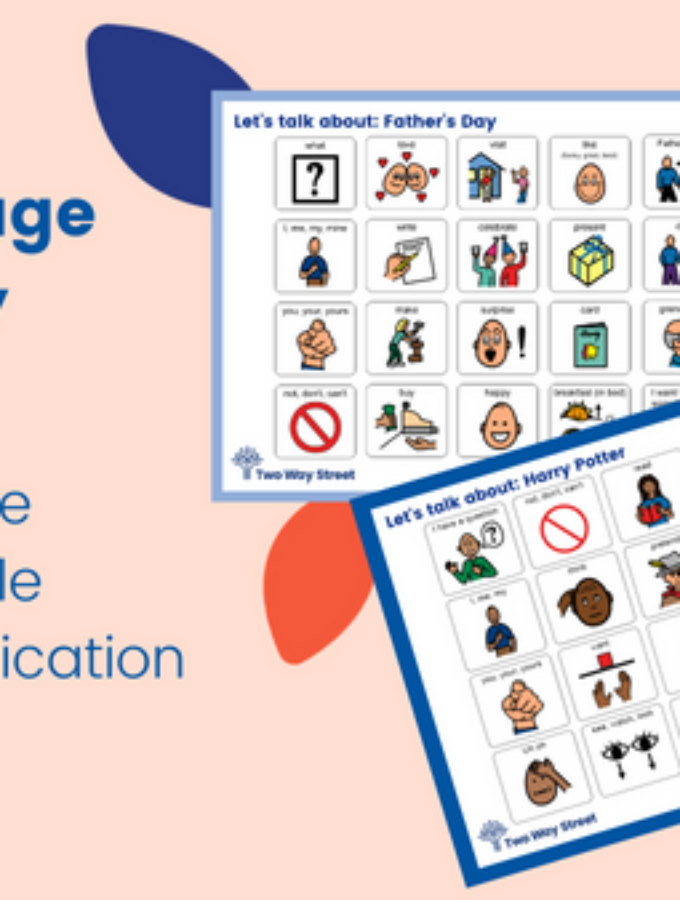
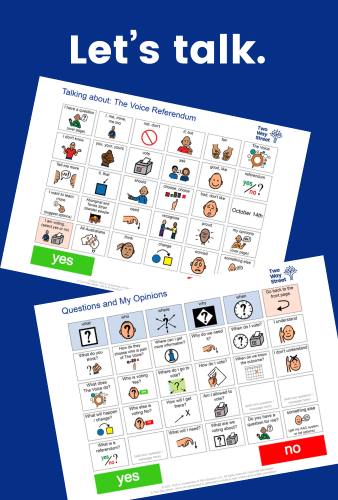
To get the conversation started for people who use communication symbols to augment their communication, we have created a ‘Talking about The Voice’ aided language display (ALD). Of course there may be many more words required for a robust discussion on this referendum. This ALD is just to get the conversation started.

The Talking About The Voice ALD

Talking about the Voice to Parliament aided language display (ALD)

The first page has vocabulary to talk about the Voice and express opinions. The second page (reverse side) includes some common questions as well as space to add the individual’s own questions that they might like to ask people. We’ve also included some spaces to add personal opinions or preferences to share with others once you’ve had a chance to think about it. If you are a parent or support worker, be sure to only add messages that have been created by the person or at a minimum, agreed upon by them.

After these discussions, you might also like to add messages to the person’s own AAC system for use in all situations, or consider sharing information on social media, or by joining their selected campaign. It is crucial that you gain consent for any action you take on their behalf and that you keep your preferences separate from theirs when sharing their message.

Download ALD

Tips when talking about the Voice with the ALD

  • Point to (and/or read out) the messages on the board as you talk to the person, and give them opportunities to say things with the board too. They may not point to the messages but may use their body, voice or facial expression to show agreement or disagreement with your messages. Watch and listen to hear their opinions or questions.
  • If a person can’t point to the symbols, then read out the options and ask them to tell you ‘yes’ or ‘no’. When you get to the one they want to say, ask if they are finished or want to add another word, otherwise you might only get half of the message.
  • To speed things up, you might point to a column at a time first, then the individual messages.
  • Scan the QR code -> for an example of what that might look like.
  • It may help to take a photo of the ALD, so you have it handy at all times. You never know when the topic of the referendum will come up. (Maybe when you’re out for coffee, or visiting friends).
  • The Two Way Street talking about the Voice referendum ALD can be used to share information with a person who would benefit from symbols to aid their understanding, and/or it can be used by the person to ask questions or talk about the referendum and their decision.
  • Remember that voting is a personal decision and it’s important to respect each individual’s views. When you are talking about The Voice with someone who uses AAC, be very aware of your own personal preferences and try to avoid any bias or coercion.

Examples of phrases using the ALD

Giving information:

  • Start by reading the Easy English Fact Sheet this is a helpful way to share information to start the discussion.
  • You could also ask the person to point to a section of the fact sheet if they don’t understand.
  • You could say tell me more if you want more information.
  • Let’s talk about the referendum.
  • It’s on October 14, 2023
  • It’s about the Aboriginal and Torres Strait Islander Voice/ The Voice
  • You can vote. (Or You can’t (not) vote yet but we can talk about it).
  • You can vote Yes or you can vote No.
  • It’s your choice.
  • (I have a question) What do you know about it?
  • (I have a question) Do you have any questions for me?

Talking about the referendum:

  • You tell me more and point to the Easy English Fact Sheet or any documents or websites you’ve been looking at.
  • I want to learn more (communication partner to offer options for the ways the person could do that such as watch, listen, read, talk with others).
  • (I have a question) Why do we need it?
  • (I have a question) What do you think?
  • (I have a question) What will happen if yes/no?
  • I don’t know.
  • Tell me more.
  • I choose/think/vote Yes
  • I choose/think/vote No
  • That’s not fair.
  • That’s fair.
  • Me too. (to agree with something someone else said)
  • I heard/think it’s good/not good for All Australians
  • I heard/think it’s good/not good for Aboriginal and Torres Strait Islander people.
  • I heard/think it’s good/not good for people who are not Aboriginal and Torres Strait Islander people.
  • We (all Australians) should vote yes/no.
  • We don’t need The Voice to recognise Aboriginal and Torres Strait Islander people.
  • We need The Voice to recognise Aboriginal and Torres Strait Islander people.
  • I feel proud of Australia because of this vote.
  • I am worried for Australia because of this vote.
  • We (you and me) should ask some other people what they think (I have a question) What do you think?

Enjoy the conversations and we look forward to a referendum where everyone has a voice about the Voice!

Other information sources

The Voice website, includes:

  • a fact sheet written in an easy to read way with pictures to explain ideas
  • videos in Auslan under ‘translated resources’
  • First Nations toolkit featuring a Conversation Guide
  • resources in languages other than english under ‘translated resources’

Visit the Australian Electoral Commission for more accessible resources and information on enrolment and voting.

Civics Australia also provides information about the referendum in an engaging way.

  • Home
  • Categories
  • Uncategorised
We see the back of a mother hugging a smiling child. Text reads 'Learn the foundations of emotional well-being'

When you’re little, emotions are big! Think back to when you were young. Did you throw an occasional tantrum? Did you have a bad day and go over it again and again in your head? Until you eventually talked about it with someone you trust and finally felt that huge sense of relief from a problem shared… Probably. 

We’ve all had a tough few years and kids have watched their world evolve in ways we could never imagine a short time ago. One of the main messages conveyed when the world was in the turmoil of a pandemic was to ‘stay connected’. We stay connected with one another through sharing stories, ideas, thoughts and even our sense of humour. And we use language to manage our emotions – to tell people how we’re feeling, to validate ourselves, to get help and to regulate ourselves. 

What happens when you have a communication disability?

So just imagine, you have a million thoughts in your head – some are worries about the future, some are funny stories about your day, some are wondering about what’s happening with your body… but, you need an augmentative communication system like a PODD or communication device, and maybe also a communication partner to share your thoughts clearly. You may not get the same opportunities to talk things through like your siblings or peers.

Emotional development is extremely intertwined with language development. During early years of communication, parents describe their own emotions and the emotions of their child. This ‘emotion talk’ is how we navigate our feelings and start to create our belief systems that stay with us through life. So it’s time to start talking about the important stuff with children with a communication disability, as early as possible, so they too can build a strong foundation for emotional well-being.

Here’s our top strategies on how you can start ‘talking about stuff’ to help manage those emotions

Set the scene

Just being aware that emotional development and language development go hand-in-hand is important. Think about all the things that happen in a day that can affect a child emotionally. Create a supportive environment, where you notice when your child may have had strong feelings about something. Celebrate and acknowledge those feelings when you notice them, and do that often! There may not be a response from the child yet, but it’s a great way to ensure they feel heard and can navigate those feelings. And keep talking about stuff in age appropriate ways! 

Provide learning opportunities

Make vocabulary available. Further to that, model emotional conversations. These conversations may be about something that happened that day or what’s happening in a story you’re reading. You can also scaffold and co-construct messages, to figure out what is happening for your child and help them learn what it means to feel a certain way, how to share their feelings with others and how to indicate why they’re feeling that way. 

Promote independence

It is crucial to encourage independent exploration and problem solving from an early age, no matter how a child communicates. Ask children to direct you when appropriate, respect preferences and begin to negotiate. Perhaps you could include your child in interviews with support workers. Any time you find yourself advocating for your child, add those messages to their communication system and show them how to advocate for themselves. Let them hear from people with lived experiences of communication difficulties. Always respect and enable privacy and authorship for anyone using AAC. Do they have the opportunity to talk privately? Can they tell you ‘don’t say that’ or ‘don’t tell anyone’?  Can they clarify a message, or say ‘that’s not what I meant’? 

By adopting these simple strategies, you can help your little one manage big emotions and navigate their world with confidence and resilience. 

Learn more

To learn more about positive emotional development in children with communication difficulties, take the FREE Two Way Street online course ‘Talking About The Important Stuff’. The course gives parents and key communication partners the skills and knowledge they need to enable meaningful conversations with their kids. 

Talking About the Important Stuff online course
  • Home
  • Categories
  • Uncategorised
How to use an Aided Language Display (ALD)

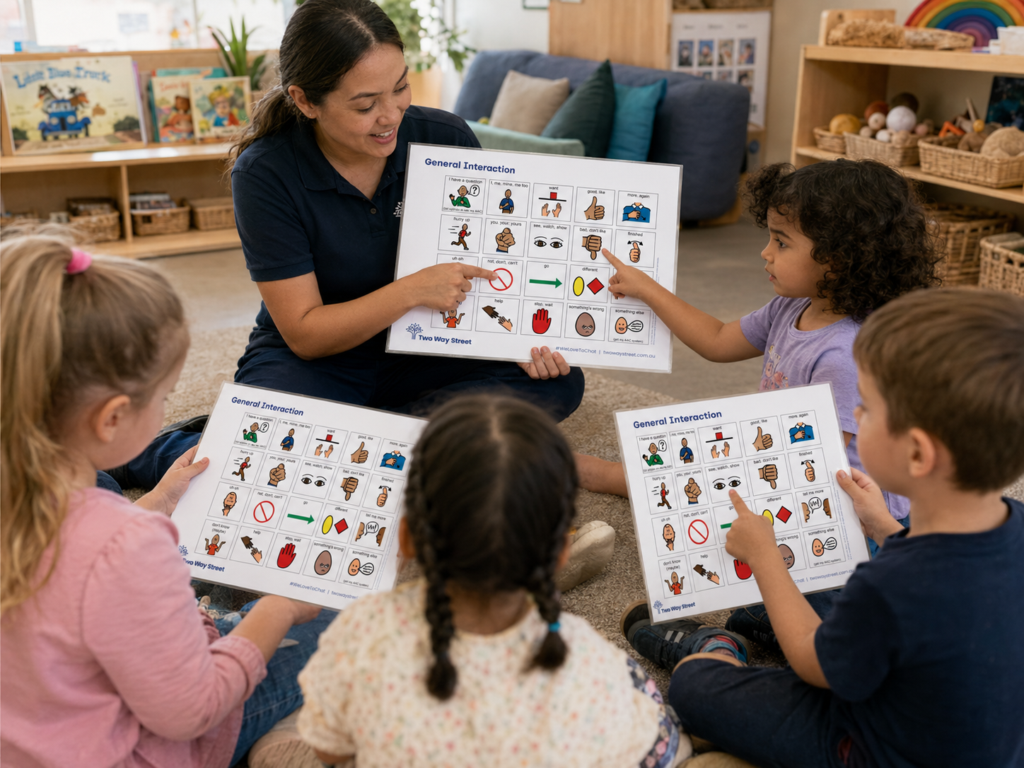
An Aided Language Display (ALD) is a strategy to enhance communication. ALDs are usually made specifically for a situation or activity. They can be used receptively or expressively. When using an ALD receptively, pointing to the symbols adds information as you talk to someone so they are better able to understand you. When it’s used expressively, you offer the ALD to someone who may benefit from symbols to augment their communication and they could use it as they talk to you.

Usually, an ALD is used both receptively and expressively during a conversation, and quite often this is in conjunction with a person’s communication system. If the person doesn’t have a communication system with them, or if they mostly communicate with speech, sign or body language, the ALD can be a great way to enhance messages specific to the situation or activity.

To use the ALD, hold it where the person can see it. Ensure the ALD is clearly visible and available, or offer it to people as they approach. Point to the symbols as you say your message, and say aloud their message when they point to the symbols. If someone is using the ALD expressively, show them that you’re listening and use the symbols on the ALD during your response. People can choose not to use the ALD. Always honour the individual’s preferences.

Watch the video for more tips on how to use an ALD

  • Home
  • Categories
  • Uncategorised
Talking about the important stuff

A program that builds the capacity of children with complex communication needs and their key communication partners to have conversations that will improve their emotional well-being and self-advocacy skills.

Presented by Margie Charlesworth and Janelle Sampson at the AGOSCI National Conference in Hobart on September 4-6, 2022.

Abstract:

The ‘Talking About Important Stuff’ project aims to help children with complex communication needs (CCN) and  their parents talk about important topics such as health, hopes, worries, fears and the harder subjects such as death and loss. 

The program will target early development of skills such as emotional development, well-being, and self-advocacy with a particular focus (as a pilot program) on young children and their parents. At completion of  the  project, a free online training program will be available that includes video lessons, real stories, examples and practice activities so that parents can share and teach their children how to  talk about stuff. The training program will support opportunities for children  and their parents to  learn and practice vocabulary, skills, and habits. We also hope to build on their attitudes and insights into the uniqueness and autonomy of their children.

It is important to acknowledge that this project is not about doing or expecting anything extra than the natural conversations that occur for parents and their children who do not have CCN. We simply aim to ensure that children with CCN do not miss out on this valuable learning and connection with their parents and/or people. 

This presentation  will share the progress of the project to date including a literature review and input from the project advisory committee and content  contributors, many of whom have CCN, or are  parents of children with CCN. This information will make up the key messages to be presented in the online program. 

READ NOW: Talking about the important stuff!
  • Home
  • Categories
  • Uncategorised

Recent changes to the National Disability Insurance Scheme (NDIS) are aiming to make things easier for participants. With these changes, come differences to the systems we’re all accustomed to. It’s important to be aware of how these changes may affect you and what you can do to be prepared. 

As we move towards longer plan duration and fewer meetings with the NDIA, you will notice new terminology and processes regarding your plan. 

What has changed with the 2022 NDIS legislation amendments

What was previously known as a ‘plan review’ will now be called a ‘plan reassessment’. Your review date will remain as-is. To ensure participants aren’t left without services, all plans that reach their reassessment date without a reassessment being completed will be automatically extended by 12 months.

You will continue to receive Participant Check-In calls from the NDIA to discuss your wellbeing, your goals and the support you need. These calls will determine whether you need:

  • A new plan with the same supports
  • A new plan with minor changes to your current supports
  • A full plan reassessment

While likely to be towards the end of your plan duration, we’ve heard that the Participant Check-In call can happen at any time, and possibly with very little notice. This highlights the need to be prepared, with your goals and budget in mind.

You can now request a ‘plan variation’ at any time. This means, in some circumstances, you can make changes to your plan without needing to replace the entire current plan. The aim here is to speed up the process for accessing new supports. 

You can read the full information shared by the NDIS on 30 June 2022. This is how the NDIS has outlined the process for changing your plan.

Our recommendations in preparation for your participant check-in

Here are some of our recommendations to ensure you’re prepared and won’t need to wait for access to new supports: 

  • Schedule some time with your Speech Pathologist to discuss communication progress. Talk through your goals and your Speechie can provide advice on which supports might suit your development best. We can also prepare a letter of recommendation to support your requests if needed. 
  • Have the Two Way Street Resources Price List on hand so you’re prepared to share the costs of any supports you may need
  • Consider upskilling yourself or anyone in your support network with online learning from Two Way Street. Plan funding covers online learning costs to allow for ‘reasonable and necessary support’ to help you participate in the community
  • Keep a running list on your phone or on the fridge with ideas, challenges or funding requests so that you are ready if you receive a Check-In call with short notice. Our team will also flag ideas as they come up during our sessions. Download the Participant Check-In List from Two Way Street to help you prepare.

How can we fund services and resources from Two Way Street?

The work we do helps people meet their daily communication needs, and therefore, funding for most Two Way Street services comes from ‘Capacity Building Supports’ and funding for communication resources may come from the ‘Core Supports’ part of your plan. We recommend discussing which Support Budget to use to claim for services with your Support Coordinator, Plan Manager or directly with the NDIS.

Key points to remember:

  • The NDIA has 21 days to respond to a request for variation or reassessment
  • It is a requirement that every variation to an NDIS plan is prepared with the participant – no changes can be made without you
  • When your plan is within 7 days of its reassessment date, it is automatically extended for another 365 days
  • The participant check-in process will continue to focus on meaningful conversation with participants and will be a key indicator as to how your plan will change in the future

It can be frustrating when things change and just knowing where to look for the right information can be half the battle. We hope this article has helped with your next steps to ensure successful changes to your plan at your next variation or reassessment.

We’re here to be your teacher, your ally and your cheer squad – even for the maze that is the NDIS. Please reach out if you need any further information on accessing the resources and services you need from us.

We share and we listen. It’s a Two Way Street.

  • Home
  • Categories
  • Uncategorised

Even though he can’t say all of the words, Ollie can still swear to de-stress by using his Sequencing App

Ollie beach.JPG

We all know how good it feels to just let off steam sometimes when things don’t go the way we plan, or the stress of life builds up. It’s just the same for Oliver, a 28 year old man, artist and poet, who has complex communication needs. He may not be able to swear/speak verbally, but he can still vent his frustrations with fast access to a sequence of swear words carefully selected by Oliver using partner assisted scanning, then programmed into an app that allows for simple sequenced messages. In this instance we used TapSpeak Sequence, but any other sequencing app would do the trick

Oliver has so much to say and when given time to select the words he wants, he can communicate complex messages, write poetry and take control over many aspects of his life.

One day, I went to visit Oliver and I immediately noticed he was tense and upset about something. I gave him the opportunity to tell me what was upsetting him, but he was so tense he couldn’t reliably move his body to confirm his message when I scanned the pages of his PODD communication book. His body and his movements were so stiff that day, it was difficult for me to read them. I asked if he just needed to ‘let it out’ first and he almost burst with a resounding ‘yes’ response. So over the next 20 minutes I read from a list of swear words and he chose which ones he would like to use and in which order. (There were quite a few repeats of certain words too J). The end result was a great ‘venting sequence’ that we programmed into his sequencing app. Oliver then sat there for the next 10 minutes swearing away happily until his body slowly relaxed and he was actually laughing about what was happening. It worked!! He has since used it quite a few more times with similar success and when asked what he thinks, Ollie says “I use (my ‘venting sequence’) when stuff happens that I don’t want to. Like seizures and more”.

In my 25+ years of working in this field, that moment had to be one of the most satisfying. I love my work and those golden opportunities when people who have little or no speech find their way to say what they are really thinking, not what others decide that we want them to say. We all need to vent, and it makes us feel better. Words are not just for choosing food or activities, they are also for sharing, loving, boasting,…..or saying something just for the sake of it.

Tap Speak Sequence is a simple yet very useful app but it is only one part of Oliver’s communication system. He also uses an auditory and visual scan PODD communication book (as he has a significant vision impairment) speech generating device controlled by 2 switches. With these more complex methods, Oliver has managed to write a series of poems that reflect his thoughts on his life, disability and many of his challenges. He has published a coffee table book that highlights his poetry as well as the beautiful photographs of his friend, Barbara Bayley. You can find details of this on his Facebook page – Oliver’s Choice, or contact us at Two Way Street


poem describing epilepsy written by Oliver Mills

Poem by Oliver Mills

Oliver also used his app to present a lecture for us at Two Way Street as part of our ‘I’ve got something to say’ lecture series, where people who use augmentative and alternative communication (AAC) present lectures about their own experiences, interests, and passions in life. Oliver uses his book and device to write the speech, and then it’s programmed into the app so that he can read it out to the audience in a timely manner. The combination of different systems means that he can say whatever he needs to say, but also say it quickly when necessary. There are many other sequences on his device too and along with his venting, he especially likes his whinging sequence for days when he needs a bit of sympathy. It includes a messages like ‘what about me’, ‘poor me’, and ‘I just need some attention’.

We all need a whinge and a vent sometimes. Of course Ollie can still do this with his PODD or device too, but sometimes getting it out quickly and easily is the most important thing.

If this is your first time reading this blog, or if you haven’t read it for a while, please be sure to read The Background Story to understand more about my posts and the beliefs that underlie them.

Two Way Street Online

28-30 The Strand
Colonel Light Gardens SA 5041

+61 (0)434 266 237
[email protected]

  • About
    • What is AAC?
    • AAC User Lecture Series
    • Our team
  • Solutions
    • Individuals and families
    • AAC professional consultation
    • PODD service
    • Schools & Early Childhood
    • Communication Access
  • Workshops and events
    • Online learning & products
    • Insights
    • Contact
    • Login
  • Privacy Policy
  • Complaints Policy
  • Child Safe Environment Policy

© Two Way Street Online 2026

Join our mailing list

  • This field is for validation purposes and should be left unchanged.
  • Fb
  • Linkedin

Your cart (items: 0)

Products in cart

Product Details Total
Subtotal $0.00
Shipping, taxes, and discounts calculated at checkout.
View my cart
Go to checkout

Your cart is currently empty!

Start shopping
Login

Lost Your Password?
Register
Don't have an account? Register one!
Register an Account

Notifications